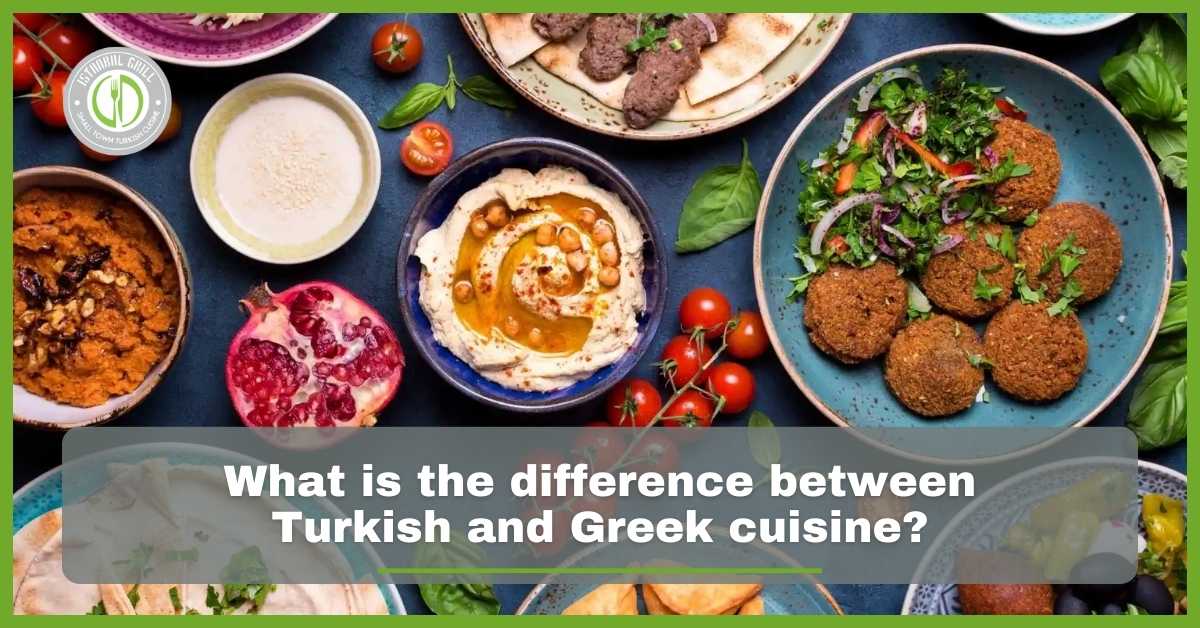
What is the difference between Turkish and Greek cuisine? Are they the same thing? Who really invented baklava? What about kebabs – are those Greek or Turkish?
These are all fantastic questions and totally fair to ask.
While Greece and Turkey share both the Mediterranean Sea and the Aegean Sea, not all their food is identical. However, much of their food is the same, with subtle differences depending on the region of either country you visit.
So if you are curious about what makes these seemingly identical cuisines different, you are in the right place.
If you want to taste authentic Turkish food without booking a flight overseas, you can experience it right here in America. Istanbul Grill serves traditional Turkish dishes in Orlando and Kissimmee. You will find all the classic flavors that make this cuisine so special, prepared the way it has been done for generations.
Plus, stay with us and find out exactly what sets these two amazing cuisines apart!
A Quick History Lesson
To really understand the beauty of both Turkish and Greek food, you need to know a little about their history. Do not worry – we will keep this interesting and easy to follow.
While Greece and Turkey share many of the same ingredients and recipes, they do not have the same story.
Greece: Where It All Started
Taking it back all the way to 2700 BC, the Minoans were the first settlers to arrive in Greece. They quickly domesticated many of the foods the world still eats today. Grains were founded here, along with wine made from wild grapes. Even olive oil, a common staple in nearly every household around the world, was born during this era.
The Minoans flourished around 3000 BC, building their entire empire around control of the sea. Despite their success, they only managed to live on until 2000 BC, when they quickly disappeared.
Minoans raised many animals such as cattle, sheep, pigs, and goats. They were also busy growing wheat, chickpeas, and barley. The wine-making process was cultivated here, as well as the growth of fruit trees and use of figs, grapes, nuts, olives, and poppy.
Given their empire was heavily centered around the sea, it is no surprise Minoans ate an enormous amount of seafood. This has carried on centuries later as Greece is much more fish-focused than Turkey.
Turkey: The Ottoman Influence
Now Turkey on the other hand was largely influenced by the Ottoman Empire. When it comes to Turkish cuisines, ingredients, and delicacies, much of Turkish food is just simply a continuation from Ottoman recipes. The culinary heritage of Turkish food is strong, with each meal honoring its past.
The Ottoman Empire spanned over three continents. By location alone, Turkey became heavily influenced by the culture of Central Asia, Persia, the Balkan Peninsula, and Arabia. New ingredients, crops, animals, and spices were introduced to the Turkish people during exchanges with Europeans.
This quickly introduced potatoes, tomatoes, corn, pumpkin, nuts, and more into Ottoman regions. They soon found a home among authentic Turkish recipes.
Since the Ottoman Empire spanned over different climates and regions, culinary art truly blossomed.
Classic Turkish meals such as dolma (grape leaves stuffed with minced meat and either fruits or vegetables) is one meal that has carried on over hundreds of years.
In addition, coffeehouses began in this era and clearly affected every corner of the world.
Turkey was also heavily influenced by surrounding countries. They adopted the concept of wine from Greece, and both rice and desserts from Persia. The Ottomans simply opened the door for fresh, new ingredients the Turks had never seen before.
What Do Greek and Turkish Food Have in Common?
Both Greece and Turkey have many similar recipes, yet they may be ever so slightly different.
For example, both countries are known for delicious, colorful, and nutrient-rich salads with many different fruits and vegetables. However, if you eat a Greek version, you may find it contains feta. A Turkish version may choose to spice it up with peppers.
Shared Ingredients That Make Both Special
1. Olives
Olives originated in Greece as a sign of peace during ancient times. Homer has been said to have stated that the olive tree was the “tree that feeds the children”. Olives were primarily used in Greek food until Turks began using this hearty ingredient.
2. Olive Oil
Since the love affair with olives began, Greek food has used it to the fullest extent. Whether used in pasta, salads, or to cook vegetables, both Turkish and Greek cuisines use pure, robust olive oil in almost everything.
3. Citrus Fruits
Not only do lemons, oranges, limes, tangerines, clementines, grapefruit, and other citrus fruits hold immense Vitamin C power, they also play a crucial role in Mediterranean cuisine. You will find them at the bottom of the Mediterranean diet pyramid with the suggestion to include them in every meal. Both Turks and Greeks use citrus fruits in desserts and juices. They truly use them religiously – breakfast, lunch, dinner, appetizers, dips, you name it!
4. Lamb
Lamb is by far the most popular choice of meat in both Greece and Turkey. While lamb came from the Ottoman Empire, the Greeks put it to full use with their world-famous gyros, kebabs, and grilled lamb chops. Turks use lamb meat for their traditional meatball recipes along with hundreds of other dishes.
5. Rice
In both Greece and Turkey, meals largely focus on three main ingredients: rice, vegetables, and bread. Both countries have incorporated rice into dozens of their famous recipes.
6. Bread
The concept and preparation of bread was born around the same time in both countries. Since then, bread has become a central part of every meal. In some cases, a meal is simply not complete unless there is bread on the table.
Common Seasonings and Spices
Both countries use similar seasonings and spices such as dill, thyme, cinnamon, allspice, mint, and parsley. These herbs bring out the natural flavors of their dishes.
A Traditional Dish They Both Make
A traditional, authentic food that both countries make is a lemon chicken soup called avgolemono.
Avgolemono – meaning egg lemon – is a chicken soup spread by Sephardic Jews into the corners of Greece, Turkey, and Arabia.
It is incredibly popular for its rich, silky texture that packs a zing with every bite. While it is made to be creamy, there is no milk or butter within.
However, Turkish cuisine recipes call for the use of yogurt (a Turkish invention) in their avgolemono while the Greek version does not. In addition, the Turkish version often uses only egg whites in their soup, while Greek avgolemono uses the whole egg.
Differences Between Turkish and Greek Recipes
While both Turkish and Greek cuisines use rice, bread, vegetables, olive oil, fruits, and meat (often lamb) to the fullest, there are some subtle differences.
While the main courses tend to stay the same, there are always consistent differences in how Greeks vs Turks prepare their dishes.
Cooking Fats: A Key Difference
Greeks tend to stay on the lighter side, using olive oil for fat. Butter and animal fat tend to dominate more Eastern and Upland Turkish meals. This makes Turkish food richer and heartier in certain regions.
Cheese Choices
Greeks invented the white, tangy, goat cheese we all know and love: feta. Feta plays an extremely important factor in many popular dishes such as gyros or Mediterranean salads.
Turks instead use beyaz peynir, a cheese quite similar to feta, but more like Romano. It has a firmer texture and slightly different taste.
Yogurt Usage
Traditional Turkish recipes call for yogurt, one of the only dairy ingredients found widely in Turkish food. Yogurt was created in Turkey as a way for milk to last longer without any form of refrigeration.
While Greek food occasionally uses yogurt, it is a staple in authentic Turkish cuisine. You will find it in soups, sauces, dips, and even drinks.
Seafood vs Land Meat
Greek dishes tend to make use of seafood more often than Turkish dishes do. Their historical roots were founded in an empire looking to own and control the sea.
Lavraki – or Greek sea bass – is a native saltwater fish often stuffed with garlic and herbs and baked on the grill. You will find fish on Greek menus much more than on Turkish ones.
Spices and Seasonings
This is where the real flavor difference comes in.
Turkish cuisine leans on bold spices like red pepper and cumin, adding a robust kick to dishes. Marash Turkish cuisine, named after a region in Turkey, uses special red pepper that adds both color and heat.
Greek cuisine favors fresh and aromatic herbs like oregano and mint, giving dishes a delicate and flavorful touch.
It all comes down to the unique blend of fruit, vegetables, grains, seafood, and spices that set Greek food and Turkish food apart.
Most Common Turkish and Greek Recipes
Since the beginning of time, Turkey and Greece have been stepping on each other’s toes. You could almost call them rivals. However, their shared recipes give them a common passion that is undeniable.
So what are some of the most popular recipes shared between both Turkey and Greece?
1. The Kebab
When you think of traditional Greek food, you may immediately think of the kebab. Both Turkish and Greek cuisines fully use the skewer and have been since the beginning of time.
Between the two there are thousands of kebab recipes and probably hundreds more yet to be invented.
You are more likely to find chicken or pork in a Greek kebab, as opposed to lamb or beef in a Turkish kebab. However, both kebabs share the hint of paprika found within.
2. Cacik and Tzatziki
Essentially, a yogurt blend with mint and cucumbers, is an extremely popular appetizer with meaty meals, especially lamb.
The only slight difference between the two is the way the cucumber is cut. That is it!
3. Dolma
In Greece, it means stuffed vine leaves. In Turkey, it means to be stuffed with something.
Either way, it is a traditional meal in both countries made from either bell peppers or grapevine leaves, stuffed with meat, rice, vegetables, and seasonings.
4. Yogurt
While originating in Turkey, yogurt is like a bridge for the two countries. Many recipes share this tangy ingredient.
Both Greece and Turkey use it not only for soups and desserts but as a dip for other herbs and seasonings.
5. Baklava
Some say baklava is a traditional Greek recipe. Some say it has always authentically been Turkish.
Both countries hold on to the pride baklava brings with all their might.
Baklava is one of the oldest dessert recipes known to the Mediterranean. A honey syrup glazed, walnut coated pastry is all this simple recipe is. However, it packs an undeniable, unique flavor in every bite.
During the Ottoman Empire the use of cinnamon, cloves, and cardamom began to arise. However, traditional baklava has always withstood the test of time.
Popular Turkish Dishes You Should Try
Turkish cuisine has so many amazing dishes. Here are some classics you need to know about.
Main Dishes
Adana Kebab – Spicy minced meat on a skewer, grilled over charcoal. The spices give it a red color and bold taste that wakes up your taste buds.
Iskender Kebab – Sliced lamb over pita bread, covered in tomato sauce and melted butter. Simple but absolutely delicious.
Lahmacun – Thin flatbread topped with minced meat and vegetables. Some people call it Turkish pizza, and honestly, they are not wrong.
Manti – Tiny dumplings filled with meat, served with yogurt and butter sauce. Making them takes time, but they are completely worth it.
Turkish Cuisine Appetizers
Turkish meals often start with meze – small plates you share with everyone at the table.
Hummus – Mashed chickpeas with tahini and olive oil. Creamy and perfect with bread.
Baba Ganoush – Smoky eggplant dip that is rich and satisfying.
Sigara Borek – Crispy fried rolls filled with cheese. They look like cigars, which is exactly how they got their name.
Ezme – Spicy tomato and pepper dip with a nice kick.
Turkish Cuisine Desserts
Turkish sweets are famous all over the world for good reason.
Baklava – Layers of thin pastry with nuts and honey syrup. Every bite is crispy, sweet, and absolutely heavenly.
Kunefe – Shredded pastry with cheese, soaked in sweet syrup. It gets served hot and literally melts in your mouth.
Turkish Delight – Soft, chewy candy that comes in many flavors like rose and pistachio.
Rice Pudding – Creamy and comforting, often topped with cinnamon. Perfect after a big meal.
Popular Greek Dishes You Should Know
The best Greek cuisine has its own set of famous dishes that people love worldwide.
Main Dishes
Moussaka – Layers of eggplant, meat sauce, and creamy bechamel on top. It is like a Greek lasagna and tastes incredible.
Souvlaki – Grilled meat on a stick, usually served with pita bread and vegetables. Simple and satisfying.
Pastitsio – Baked pasta with meat sauce and bechamel. Comfort food at its absolute best.
Gyros – Meat cooked on a vertical rotisserie, sliced thin, and wrapped in pita with vegetables and tzatziki. A street food classic.
Greek Cuisine Appetizers
Greeks also love starting meals with small dishes to share.
Tzatziki – Yogurt sauce with cucumber, garlic, and dill. Perfect for dipping bread or fresh vegetables.
Spanakopita – Spinach and feta wrapped in crispy phyllo pastry. Flaky on the outside, savory on the inside.
Dolmades – Grape leaves stuffed with rice and sometimes meat. Tangy and delicious.
Saganaki – Fried cheese that gets flamed at your table. It is fun to watch and even better to eat.
Greek Cuisine Desserts
Greek sweets are less syrupy than Turkish ones but just as tasty.
Baklava – Yes, Greeks make it too! Their version uses honey and walnuts with that signature crispy texture.
Galaktoboureko – Custard pie wrapped in phyllo pastry and soaked in syrup. Creamy and sweet.
Loukoumades – Fried dough balls drizzled with honey. They are like Greek donuts and totally addictive.
Yogurt with Honey – Simple but perfect. Greek yogurt is thick, creamy, and pairs beautifully with honey.
Is Turkish Food Mediterranean?
Yes! Turkish food is definitely Mediterranean.
The Mediterranean diet includes foods from all countries around the Mediterranean Sea – Greece, Turkey, Italy, Spain, and others.
What are Greek foods? They are also Mediterranean. Both Turkish and Greek cuisines follow the same basic principles:
- Lots of vegetables and fruits
- Olive oil as the main fat
- Fish and seafood
- Whole grains
- Small amounts of meat
- Herbs and spices for flavor
This style of eating is known for being very healthy. It can help your heart, keep your weight balanced, and might even help you live longer.
Health Benefits of Mediterranean Cuisine
Since both Turkish and Greek food are Mediterranean, they share similar health benefits.
Good for Your Heart
Olive oil contains healthy fats that protect your heart. Both cuisines use it generously in cooking and dressings.
Packed with Nutrients
Fresh vegetables, fruits, and herbs provide vitamins and minerals your body needs to stay healthy and strong.
Helps Control Weight
These cuisines focus on whole foods, not processed junk. This makes it easier to maintain a healthy weight without feeling like you are on a strict diet.
May Lower Disease Risk
Studies show that Mediterranean eating may reduce the risk of diabetes and some cancers. The antioxidants and healthy fats play a big role in this.
Brain Health
The healthy fats and antioxidants in this food may help keep your brain sharp as you age. Who does not want that?
How to Cook Mediterranean Style at Home
Want to bring these amazing flavors into your own kitchen? Here are some easy tips to get started.
Use Fresh Herbs Generously
Keep basil, oregano, parsley, and mint in your kitchen. Add them to dishes at the end of cooking to keep their flavor bright and fresh.
Cook with Olive Oil
Replace butter with olive oil when you can. It is healthier and adds a wonderful taste to everything from vegetables to grilled meats.
Marinate Your Meat
Mix olive oil, lemon juice, and garlic. Let your meat sit in this mixture for at least an hour before cooking. It will taste better and be more tender. Trust me on this one.
Eat More Vegetables
Both cuisines put vegetables front and center on the plate. Try to fill half your plate with them at every meal.
Take Your Time
Mediterranean cultures take time to eat. Sit down, relax, and enjoy your food with family or friends. Eating is not just about the food – it is about the experience.
Where to Find Authentic Turkish Food in America
You do not need to travel halfway across the globe to enjoy authentic Turkish and Greek food.
If you live in or visit Orlando or Kissimmee in Florida, stop by Istanbul Grill. They serve traditional Turkish dishes made the right way, using recipes passed down through generations.
Good Turkish restaurants will have:
- Freshly grilled meats cooked over charcoal
- Homemade bread baked fresh daily
- Various meze options to share
- Traditional desserts like baklava and kunefe
- Turkish tea or coffee to finish your meal
Experience the magic that both Turkish and Greek food will bring to your palate, without having to book an international flight.
All in All
When it comes down to it, all Greek and Turkish food are Mediterranean but not all Mediterranean food can be classified as either Greek or Turkish.
While it can be difficult to tell them apart, one thing to keep in mind is that the differences are in the subtleties. You will not find a vast, stark contrast of ingredients or flavors between the two because they do share climates, influences, and many affecting factors.
However, you will find the choice of spices and seasonings they use, as well as the fruits and vegetables, will guide you to being able to tell them apart.
Both cuisines offer delicious, healthy food that has fed people for thousands of years. Whether you prefer the spicy warmth of Turkish dishes or the herbal freshness of Greek food, you cannot go wrong with either choice.
The best way to decide which you like better? Try both! Visit Turkish and Greek restaurants in your area. Cook some recipes at home. Discover which flavors speak to your taste buds.
And remember – the friendly arguments about who invented what dish first are part of the fun. Both cultures are incredibly proud of their food, and they absolutely should be.
FAQs
[rank_math_rich_snippet id=”s-4077f3cc-015d-45df-8f02-f2e3e6ead636″]