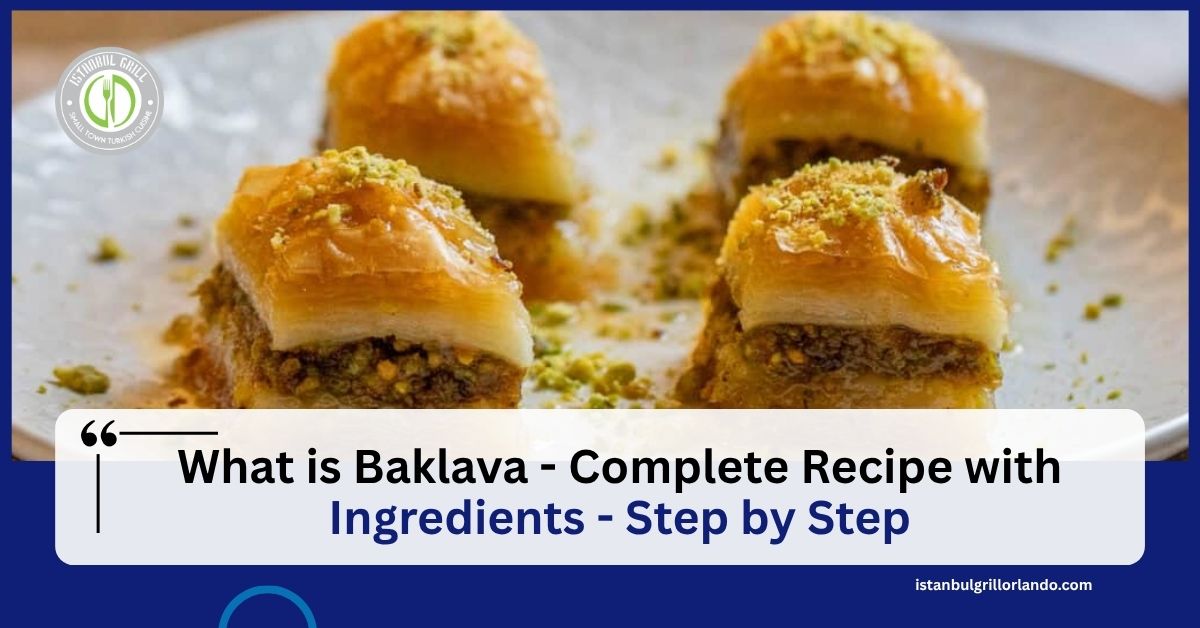
Have you ever tasted something so delicious that you wanted to know everything about it? That is exactly how most people feel when they try baklava for the first time.
Baklava is one of those desserts that looks fancy and tastes amazing. The good news is you can make it at home, and it is easier than you think. Suppose you want to try authentic baklava before making it yourself. In that case, you can visit Istanbul Grill Restaurant in Orlando or Kissimmee, where we serve fresh, handmade baklava just as families have been making it for centuries.
Let me show you everything you need to know about this wonderful dessert.
What is Baklava?
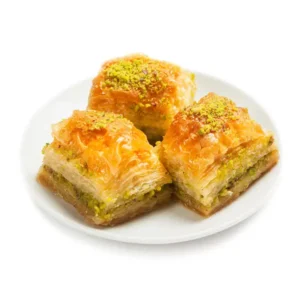
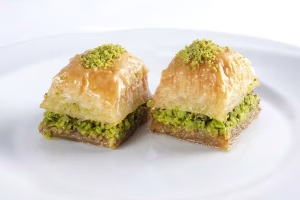
Baklava is a sweet dessert made with thin layers of pastry, crushed nuts, butter, and sweet syrup. Imagine biting into something crispy, flaky, and full of flavor all at once. That is baklava.
The pastry used in baklava is called phyllo dough. It is paper-thin, almost like tissue paper. When you layer it with melted butter and bake it, the phyllo becomes golden, crispy, and incredibly delicious.
Between these crispy layers, you will find a mixture of finely chopped nuts. The most common nuts are walnuts, pistachios, or a mix of both. Some recipes also use almonds or hazelnuts.
After baking, the hot baklava gets covered with a sweet syrup made from sugar, water, and honey. The syrup soaks into all the layers and makes every bite perfectly sweet and moist.
Where Does Baklava Come From?
Baklava has a rich history that goes back hundreds of years. Many countries in the Middle East and Mediterranean region claim it as their own, and each place makes it a little differently.
Turkey is famous for its baklava, especially the kind made with pistachios. Greek baklava often uses walnuts and cinnamon. Lebanese baklava might be cut into different shapes and use orange blossom water in the syrup. Syrian baklava is known for being extra crispy and sweet.
The truth is baklava belongs to many cultures. It has been enjoyed at celebrations, weddings, and family gatherings for generations. No matter where it comes from, one thing is certain. Everyone who tries it falls in love with it.
Why is Baklava So Special?
What makes baklava different from other desserts? There are a few reasons.
First, it takes time and care to make. You cannot rush the process. Layering the phyllo dough, b rushing each sheet with butter, and cutting the pieces before baking all require attention. When you make baklava, you are creating something with your hands and your heart.
Second, the texture is unlike anything else. You get crispy, flaky layers on the outside and soft, nutty goodness on the inside. Every bite has a little crunch and a lot of flavor.
Third, baklava is not too sweet. Yes, it has syrup, but the honey and lemon juice balance the sweetness. The nuts add a natural, earthy taste that keeps the dessert from being overwhelming.
Finally, baklava is a dessert you can make ahead of time. In fact, it tastes even better the next day after the syrup has had time to soak into every layer.
Ingredients You Will Need
Making baklava at home is simple when you have the right ingredients. Here is everything you need.
For the Baklava Layers
- 1 pound of phyllo dough (usually comes in a 16-ounce package with about 40 sheets)
- 1 and a half cups of unsalted butter, melted
- 4 cups of walnuts, finely chopped (you can also use pistachios or a mix)
- 1 teaspoon of ground cinnamon
- A pinch of ground cloves (optional, but adds nice flavor)
For the Sweet Syrup
- 1 cup of sugar
- 1 cup of water
- 3/4 cup of honey
- 2 tablespoons of fresh lemon juice
- 1 teaspoon of vanilla extract (optional)
You can find phyllo dough in the frozen section of most grocery stores. Make sure you buy the thin kind, not the thick pastry sheets.
Step-by-Step Instructions to Make Baklava
Now let me walk you through the process. Take your time and enjoy each step.
Step 1: Thaw the Phyllo Dough
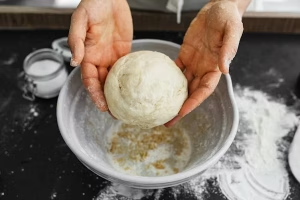
Phyllo dough needs to be thawed slowly. Take it out of the freezer and put it in the refrigerator the night before you plan to bake. This usually takes about 12 hours.
On the day you are ready to bake, take the phyllo out of the fridge and let it sit on your kitchen counter for about 1 hour. This brings it to room temperature and makes it easier to work with.
Do not rush this step. If the phyllo is too cold or too warm, it will tear easily.
Step 2: Prepare Your Baking Pan
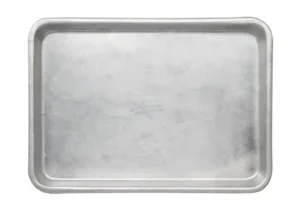
Use a 9×13 inch baking pan. Brush the bottom and sides with melted butter. This keeps the baklava from sticking and adds extra flavor.
Preheat your oven to 325 degrees Fahrenheit while you prepare everything else.
Step 3: Make the Sweet Syrup
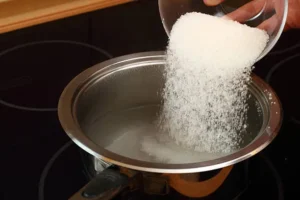
It is best to make the syrup first so it has time to cool down while you assemble the baklava. This is very important. The syrup must be cool when you pour it over the hot baklava.
In a medium saucepan, combine 1 cup of sugar and 1 cup of water. Heat it on the stove over medium heat. Stir occasionally until the sugar dissolves completely.
Add 3/4 cup of honey and stir to mix. Bring the mixture to a boil, then lower the heat and let it simmer gently for about 20 minutes. The syrup will thicken slightly.
Remove the saucepan from the heat and stir in 2 tablespoons of lemon juice. Let the syrup cool to room temperature. You can even put it in the fridge to speed up the cooling process.
Step 4: Prepare the Nut Mixture
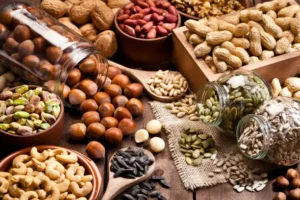
Place your walnuts in a food processor and pulse them a few times until they are finely chopped. You do not want them to turn into powder. They should still have some small pieces for texture.
Transfer the chopped walnuts to a bowl. Add 1 teaspoon of cinnamon and a pinch of ground cloves if you like. Mix everything together.
Step 5: Work with the Phyllo Dough
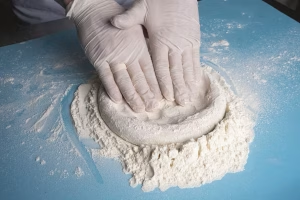
Carefully unroll the phyllo dough. It comes in a rolled-up stack of very thin sheets. Handle it gently because it tears easily.
If your phyllo sheets are bigger than your pan, you can trim them with kitchen scissors to fit. Keep the phyllo sheets covered with a slightly damp kitchen towel while you work. This prevents them from drying out.
Step 6: Start Layering the Baklava
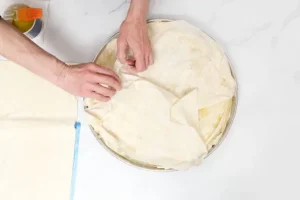
Now comes the fun part. You are going to create layers.
Take one sheet of phyllo and lay it flat in your buttered baking pan. Use a pastry brush to lightly brush melted butter all over the sheet.
Place another sheet of phyllo on top and brush it with butter. Keep doing this until you have layered about 10 sheets of phyllo, brushing each one with butter.
After the first 10 layers, sprinkle about one-fifth of your nut mixture evenly over the phyllo. Do not press it down. Just let it sit gently on top.
Now add 5 more sheets of phyllo, brushing each one with butter. Then add another layer of nuts.
Repeat this process. You will add 5 buttered phyllo sheets, then nuts, and repeat until you have used up all your nut mixture. You should have about 5 layers of nuts in total.
Finish with a final layer of 10 phyllo sheets, brushing each one with butter. Make sure to brush the very top sheet with butter as well.
Step 7: Cut the Baklava Before Baking
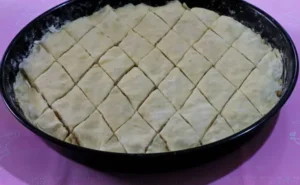
This step is very important. You must cut the baklava before you bake it. Once it is baked, it will be too crispy and will break into pieces if you try to cut it.
Use a sharp knife to cut the baklava into diamond shapes or squares. First, cut straight lines down the length of the pan, making strips about 1 and a half inches wide. Then cut diagonal lines across to form diamonds.
You should end up with about 24 to 30 pieces, depending on how big you make them.
Step 8: Bake the Baklava
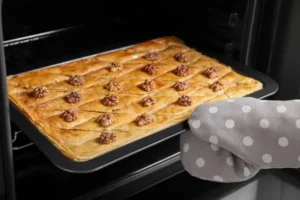
Place the baking pan on the middle rack of your preheated oven. Bake at 325 degrees Fahrenheit for about 1 hour to 1 hour and 15 minutes.
You will know it is done when the top turns a beautiful golden brown color. The edges should be crispy and the whole kitchen will smell amazing.
Check on your baklava halfway through baking to make sure it is browning evenly. Every oven is a little different.
Step 9: Pour the Syrup Over Hot Baklava
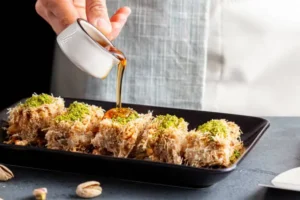
As soon as you take the baklava out of the oven, it is time to add the syrup. The baklava should be hot and the syrup should be cool. This combination is the secret to perfect baklava.
Slowly pour the cooled syrup evenly over the entire pan of hot baklava. You will hear it sizzle. This is a good sign. The hot layers will absorb the cool syrup and become tender and sweet.
Make sure every piece gets some syrup. Use a spoon to drizzle it into any spots you might have missed.
Step 10: Let it Cool and Rest
This is the hardest part. You have to wait. Let the baklava sit uncovered at room temperature for at least 4 to 6 hours. If you can wait overnight, that is even better.
During this time, the syrup soaks into all the layers. The flavors blend together and the baklava becomes perfectly moist and delicious.
Once it has rested, you can cut through the lines you made earlier and serve the pieces. If you like, you can garnish each piece with a sprinkle of finely chopped pistachios or a drizzle of melted chocolate.
Tips for Perfect Baklava Every Time
Let me share some tips that will help you succeed.
Keep the phyllo covered: Phyllo dough dries out in seconds. Always keep it covered with a damp towel when you are not using it.
Do not skip the butter: Every layer needs butter. This is what makes the phyllo crispy and golden. Do not try to use less butter to save calories. It will not work.
Cool syrup, hot baklava: This rule is very important. If both the syrup and baklava are hot, the baklava will get soggy. If both are cool, the syrup will not absorb properly. Cool syrup on hot baklava is the perfect combination.
Chop the nuts well: The nuts should be finely chopped but not turned into powder. You want small pieces that add texture but do not make the baklava hard to bite.
Use a sharp knife: A dull knife will drag and tear the phyllo. Use your sharpest knife to cut clean lines.
Be patient: Baklava gets better as it sits. Do not rush to eat it right away. Let it rest and absorb all the syrup.
How to Store Baklava
Baklava keeps very well, which makes it perfect for making ahead of time.
Once it has cooled completely, you can cover it loosely with a clean kitchen towel. Do not use plastic wrap or a tight lid because this can make the baklava lose its crispy texture.
Store it at room temperature for up to 2 weeks. Yes, 2 weeks. The honey syrup acts as a natural preservative.
If you want to keep it longer, you can freeze baked baklava. Wrap individual pieces in plastic wrap, then place them in a freezer-safe container. They will last up to 4 months in the freezer.
To enjoy frozen baklava, just take out the pieces you want and let them thaw at room temperature for a couple of hours.
Serving Suggestions
Baklava is delicious on its own, but here are some ways to make it even more special.
Serve it with a cup of strong Turkish coffee or hot tea. The slight bitterness of the coffee balances the sweetness of the baklava perfectly.
You can also serve baklava with a scoop of vanilla ice cream. The cold ice cream and warm baklava create a wonderful contrast.
For a fancy presentation, drizzle a little extra honey on the plate and add a few fresh mint leaves as garnish.
Baklava is perfect for holidays, dinner parties, or any time you want to impress your guests. At Istanbul Grill Restaurant in Orlando and Kissimmee, we serve baklava as a traditional finish to our meals, and our guests always ask for seconds.
Final Thoughts
Making baklava at home is a rewarding experience. Yes, it takes a little time and patience, but the result is worth every minute. When you bite into that crispy, sweet, nutty dessert, you will feel proud knowing you made it yourself.
Baklava is more than just a dessert. It is a tradition that has been passed down through families for generations. When you make it, you become part of that tradition.
If you are not quite ready to make it at home yet, or if you just want to taste authentic baklava made by experts, come visit us at Istanbul Grill Restaurant in Orlando or Kissimmee. We prepare our baklava fresh using traditional methods and the finest ingredients. One bite and you will understand why people have loved this dessert for hundreds of years.
Whether you make it yourself or enjoy it at our restaurant, baklava is a sweet experience you will never forget.
Frequently Asked Questions
[rank_math_rich_snippet id=”s-4defd631-395e-4093-b40e-b5aa805a6250″]