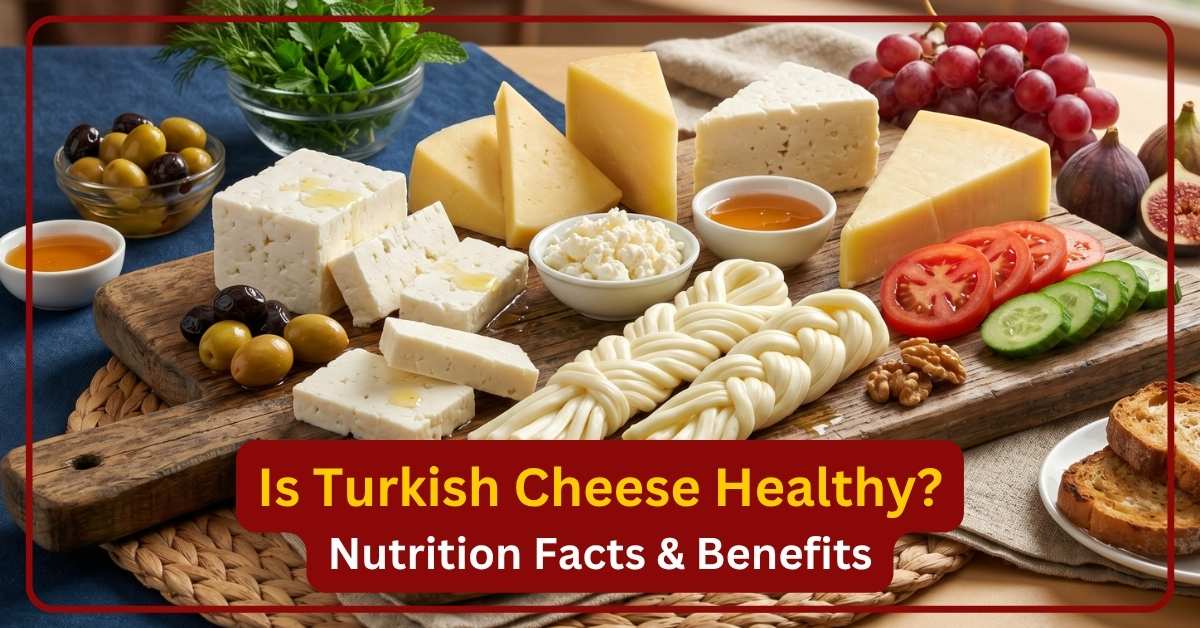
Walk into any Turkish kitchen in the morning and you will find something that has been on the table for generations: a platter of white cheese, olives, fresh bread, and tea. Turkish cheese is not a trend. It is a staple, eaten every single day by millions of people. But if you are watching what you eat or simply trying to understand what is actually in your food, the question is fair. Is Turkish cheese healthy?
The short answer is yes, when eaten in the right portions, Turkish cheese offers real nutritional value. It is a source of protein, calcium, healthy fats, and important vitamins. But like every food, context matters. This guide covers what Turkish cheese is made of, how it compares nutritionally to other popular cheeses, what the research says about its health effects, and which types work best for specific health goals.
At Istanbul Grill, we serve traditional Turkish cheeses as part of our authentic menu. We believe knowing what is in your food makes the experience richer. So let us get into it.
What Is Turkish Cheese?
Turkish cheese is not a single product. It is a family of cheeses made across Turkey, each with its own milk source, texture, aging method, and regional character. The most common variety you will encounter is beyaz peynir, which simply means white cheese in Turkish. It is a brined, soft-to-firm cheese made from sheep, cow, or goat milk, and it sits somewhere between feta and fresh mozzarella in texture.
- Kasar (Kaşar): A semi-hard, yellow cheese similar to young cheddar or Gouda, made from sheep’s milk. Mild and slightly buttery, it melts well.
- Tulum: A crumbly, aged white cheese traditionally stored in goatskin bags. Sharper and saltier than beyaz peynir with complex flavour.
- Lor: A fresh, unsalted whey cheese similar to ricotta. Very light, low in fat, and often eaten with honey for breakfast.
- Mihaliç (Kelle Peyniri): A hard, sharp sheep’s milk cheese from the Marmara region. Dense and full-flavoured.
- Van Otlu Peyniri: An herb-infused white cheese from eastern Turkey, packed with wild plants that add both flavour and nutritional complexity.
Each variety has a slightly different nutritional profile, but they all share the core qualities of dairy: protein, fat, calcium, and B vitamins. If you have ever wondered how Turkish white cheese compares to Greek feta specifically, our detailed post on the difference between feta and Turkish white cheese goes deep on that comparison.
Turkish Cheese Facts (Per 100g)
The table below shows approximate nutritional values for the most common Turkish cheese varieties, based on data from standard dairy composition records. Values vary by producer and milk type.
Nutrition
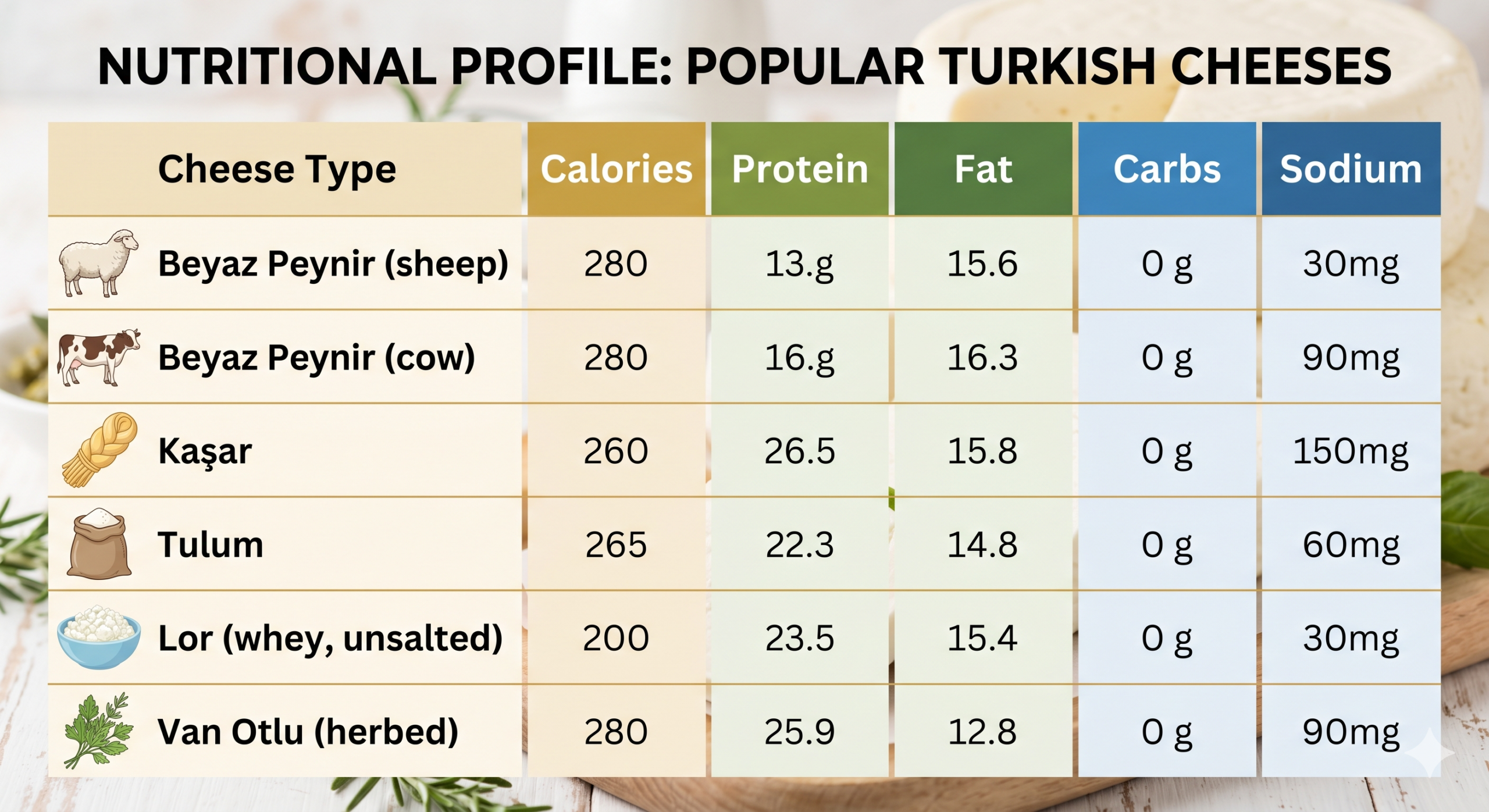
Note: Values are approximations. Sheep’s milk versions are higher in fat and calories but also richer in fat-soluble vitamins. Cow’s milk versions are leaner. Lor is the lightest option by a significant margin.
Key Nutrients in Turkish White Cheese
Beyond the macros, here is what you actually get from a typical 50g serving of beyaz peynir (roughly two thick slices):
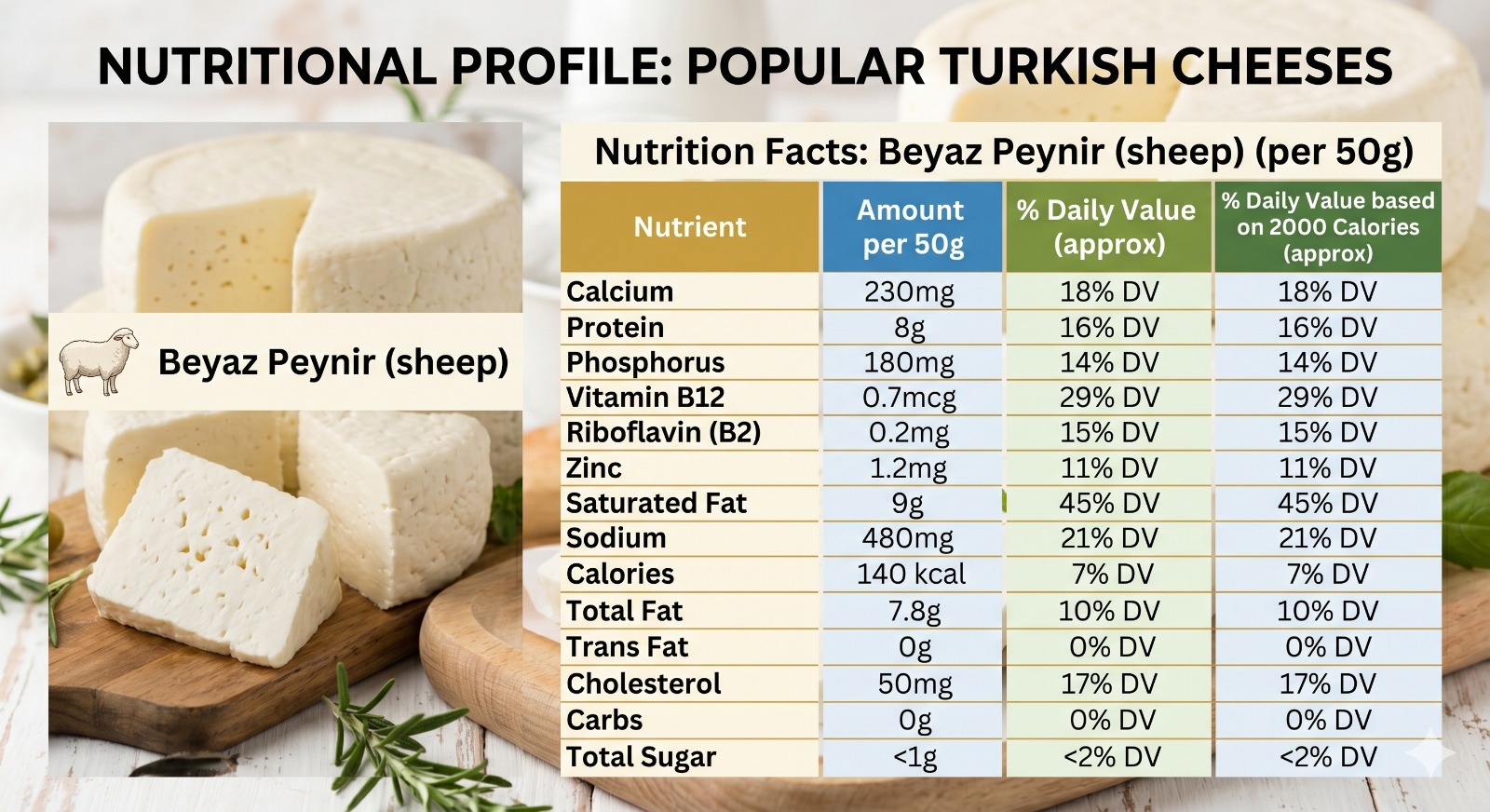
Two nutrients stand out immediately: calcium and vitamin B12. Both are essential for bone health, nerve function, and energy metabolism, and Turkish cheese delivers meaningful amounts of each in a small serving.
Health Benefits of Turkish Cheese
1. Strong Bone Support
Calcium is the headline benefit of any dairy cheese, and Turkish cheese is no exception. A single 50g serving of beyaz peynir provides roughly 18 to 22 percent of the daily recommended calcium intake for adults. Calcium works alongside phosphorus and vitamin D to maintain bone density, reduce fracture risk, and support teeth. For older adults and women post-menopause, this matters considerably. Dairy-sourced calcium also tends to be better absorbed by the body than calcium from plant sources, partly due to the presence of lactose and vitamin D.
2. High-Quality Protein
Turkish cheese, particularly Kasar and beyaz peynir made from sheep’s milk, is a solid source of complete protein, meaning it contains all essential amino acids. Protein from cheese supports muscle maintenance, helps with satiety after meals, and plays a role in immune function. For people who do not eat meat or poultry regularly, Turkish cheese is a practical way to keep protein intake up at breakfast or lunch.
3. Gut-Friendly Cultures
Traditionally made beyaz peynir and tulum are fermented and brined, meaning they contain live bacterial cultures. These probiotic bacteria, similar to those found in yogurt, support a healthy gut microbiome, improve digestive function, and may contribute to immune health. The fermentation process also partially breaks down lactose, which is why some people who are mildly lactose intolerant can tolerate aged Turkish cheeses better than fresh dairy products.
4. B Vitamins for Energy and Nerve Health
Turkish cheese is a meaningful source of vitamin B12, riboflavin (B2), and niacin (B3). These B vitamins are involved in energy metabolism, DNA synthesis, and nerve function. Vitamin B12 in particular is only found naturally in animal products, making cheese a valuable source for those who do not eat meat. A 50g serving of beyaz peynir provides nearly a third of the daily B12 requirement for adults.
5. Conjugated Linoleic Acid (CLA)
Sheep’s milk cheese, which includes many premium Turkish beyaz peynir and tulum varieties, contains conjugated linoleic acid, a type of naturally occurring fatty acid associated with potential benefits including improved body composition, anti-inflammatory effects, and immune support. Research on CLA is ongoing, but sheep dairy consistently shows higher CLA content than cow’s milk dairy.
6. Moderate Glycaemic Impact
Turkish cheese has virtually no carbohydrates, which means it has a negligible glycaemic index. For people managing blood sugar levels, including those with type 2 diabetes or insulin resistance, cheese is a food that does not cause blood glucose spikes. Pairing it with whole grain bread, fresh vegetables, or olives at breakfast creates a balanced, low-GI meal.
What About the Salt?
This is the one area where Turkish cheese deserves an honest look. Brined white cheeses are high in sodium. A 50g serving of beyaz peynir can contain between 400mg and 600mg of sodium, roughly 20 to 25 percent of the recommended daily limit for most adults. Tulum tends to be even saltier.
For most healthy people eating cheese as part of a balanced diet, this is manageable. But for people with high blood pressure, heart disease, or kidney conditions, sodium intake from brined cheese is something to monitor. A few practical approaches help:
- Soak cubed beyaz peynir in cold fresh water for 30 to 60 minutes before eating. This draws out a significant portion of the salt.
- Choose Lor cheese, which is unsalted and only has around 80mg of sodium per 100g.
- Reduce salt elsewhere in the meal when serving Turkish cheese.
- Opt for cow’s milk versions over sheep’s milk, as they tend to be slightly lower in sodium.
How Turkish Cheese Compares to Other Popular Cheeses
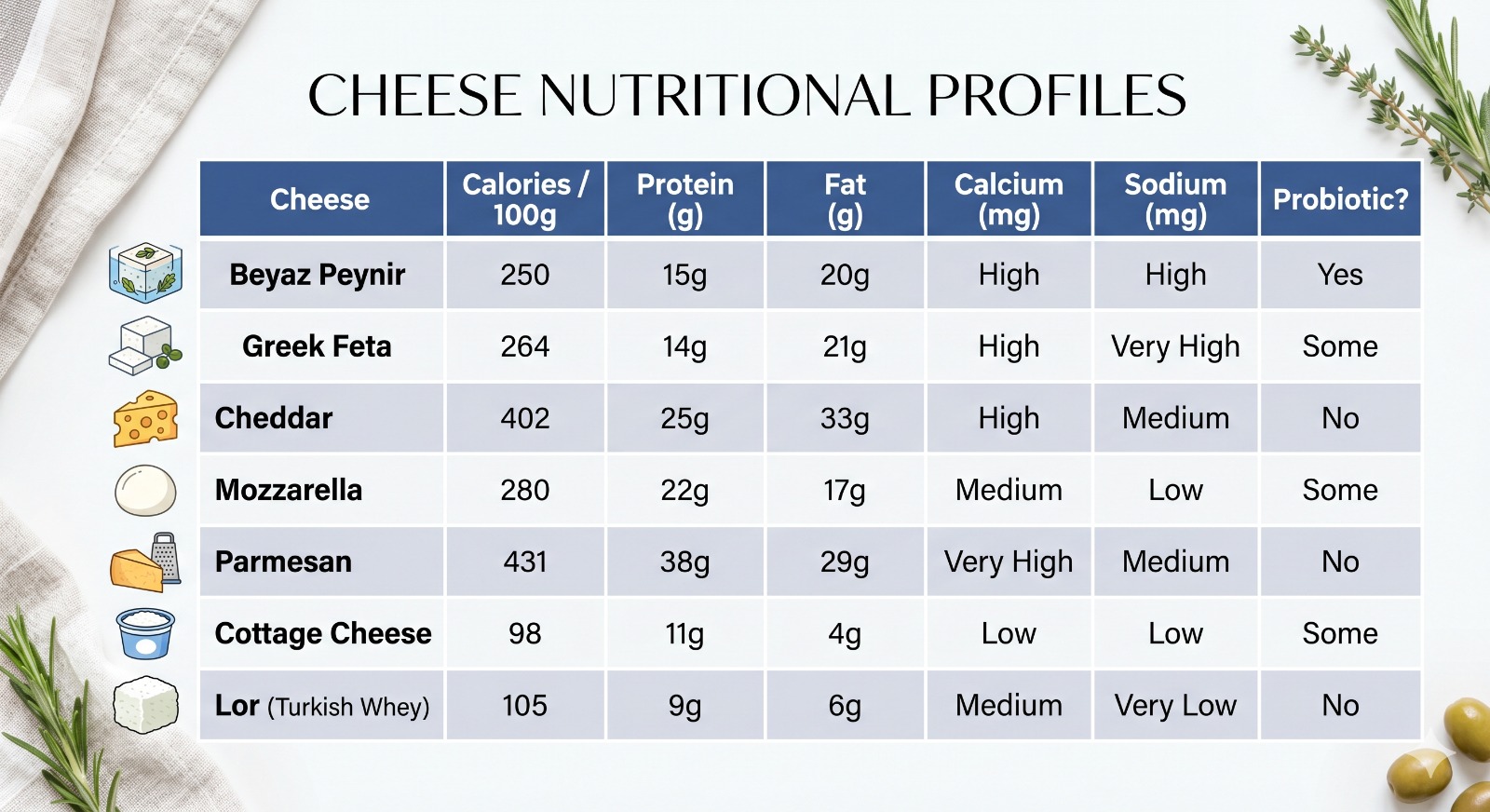
Compared to cheddar and parmesan, Turkish white cheese is lower in calories and fat while still delivering solid protein and calcium. Compared to cottage cheese, it has more flavour and higher fat content but similar protein. In the broader cheese landscape, beyaz peynir sits comfortably in the middle: more nutritious than processed cheese, less calorie-dense than hard aged cheeses, and more flavourful than fresh mild cheeses.
Turkish Cheese in a Healthy Diet
Turkish cheese features prominently in the traditional Turkish diet, which shares many characteristics with the Mediterranean diet, consistently ranked among the healthiest eating patterns in the world. The traditional Turkish breakfast (kahvalti) typically includes white cheese alongside olives, tomatoes, cucumbers, eggs, whole grain bread, and tea. This combination delivers protein, healthy fats, fibre, and micronutrients in a balanced, satisfying meal.
At Istanbul Grill, we serve Turkish cheese as part of our breakfast platters and meze spreads. If you want to see how it features alongside other traditional dishes, our full menu shows the range of ways we incorporate it into authentic Turkish cooking.
Research published in studies of Mediterranean dietary patterns consistently finds that moderate dairy consumption, including cheese, is associated with reduced risk of cardiovascular disease, type 2 diabetes, and metabolic syndrome, particularly when cheese replaces ultra-processed foods rather than being added on top of an already high-calorie diet.
Turkish Cheese and the Traditional Breakfast Connection
One of the most compelling arguments for Turkish cheese is the context in which it has always been eaten. The Turkish breakfast table is built around balance: protein from cheese and eggs, healthy fats from olives and olive oil, fibre and complex carbohydrates from vegetables and whole grain bread, and antioxidants from fresh herbs and tomatoes. Cheese is not the centrepiece. It is part of a nutritionally diverse spread that sustains energy for hours.
This is quite different from how cheese is often consumed in Western diets, piled onto processed crackers or fast food items. The traditional Turkish approach, where cheese is one of many components in a varied, largely whole-food breakfast, is one reason researchers studying Mediterranean and Middle Eastern dietary patterns often point to Turkey as a model of balanced eating.
For a deeper look at what a proper Turkish breakfast looks like and what each component brings to the table, our piece on Turkish delights: cheese and tea covers the cultural and culinary tradition behind this morning ritual.
What the Research Says
The broader body of nutritional research on fermented dairy and brined cheeses supports moderate consumption as part of a balanced diet.
The British Heart Foundation’s nutritional guidance on cheese (BHF Cheese Guide) echoes this position: cheese can be part of a heart-healthy diet when portions are sensible and sodium intake is managed across the rest of the day.
Both sources make the same underlying point. The problem with cheese in modern diets is rarely the cheese itself but the overall dietary pattern it sits within. When Turkish cheese is eaten the way it has been eaten in Turkey for centuries, as part of a varied, vegetable-rich, whole-food breakfast, the evidence consistently supports it as a nutritious food.
The Bottom Line
Turkish cheese is a genuinely nutritious food. It delivers meaningful amounts of protein, calcium, vitamin B12, and beneficial bacteria in a flavourful, versatile package that has been part of a healthy traditional diet for centuries. The sodium content deserves attention, particularly for people with blood pressure concerns, but simple techniques like soaking in water or choosing Lor significantly reduce that issue.
The key, as with most foods, is context and portion. Eaten as part of a Turkish-style breakfast alongside fresh vegetables, olives, eggs, and whole grain bread, beyaz peynir contributes positively to a balanced diet. Eaten in large quantities on top of an already sodium-heavy diet, it becomes a problem.
If you want to experience Turkish cheese the way it was meant to be eaten, in a complete, traditional spread rather than in isolation, come and visit us at Istanbul Grill. Our kitchen uses authentic Turkish cheeses prepared the traditional way, and our team is always happy to talk through what is on the plate.
Is Turkish white cheese healthy?
Yes, Turkish white cheese (beyaz peynir) is considered a healthy cheese option. It's typically lower in fat and calories than many Western cheeses, high in protein and calcium, and contains beneficial probiotics that support digestive health. Made primarily from sheep's or goat's milk, Turkish white cheese also provides essential vitamins and minerals whilst being lower in lactose, making it easier to digest for many people.
Which is the healthiest cheese to eat?
Cottage cheese, mozzarella, and feta are amongst the healthiest cheese options due to their lower calorie and fat content combined with high protein levels. Fresh, unprocessed cheeses are generally healthier than aged or processed varieties. For the healthiest choice, opt for cheeses made from grass-fed animals, look for lower sodium options, and choose varieties high in probiotics like aged cheddar, gouda, or traditional white cheeses.
What is the best Turkish cheese?
Beyaz peynir (Turkish white cheese) is widely considered the best and most popular Turkish cheese, particularly the variety from Ezine, which holds protected geographical indication status. Other excellent Turkish cheeses include Kaşar (a semi-hard aged cheese), Tulum (a traditional artisanal cheese aged in goatskin), and Lor (a fresh, mild cheese similar to ricotta). Each offers unique flavours and textures whilst maintaining the nutritional benefits Turkish cheeses are known for.