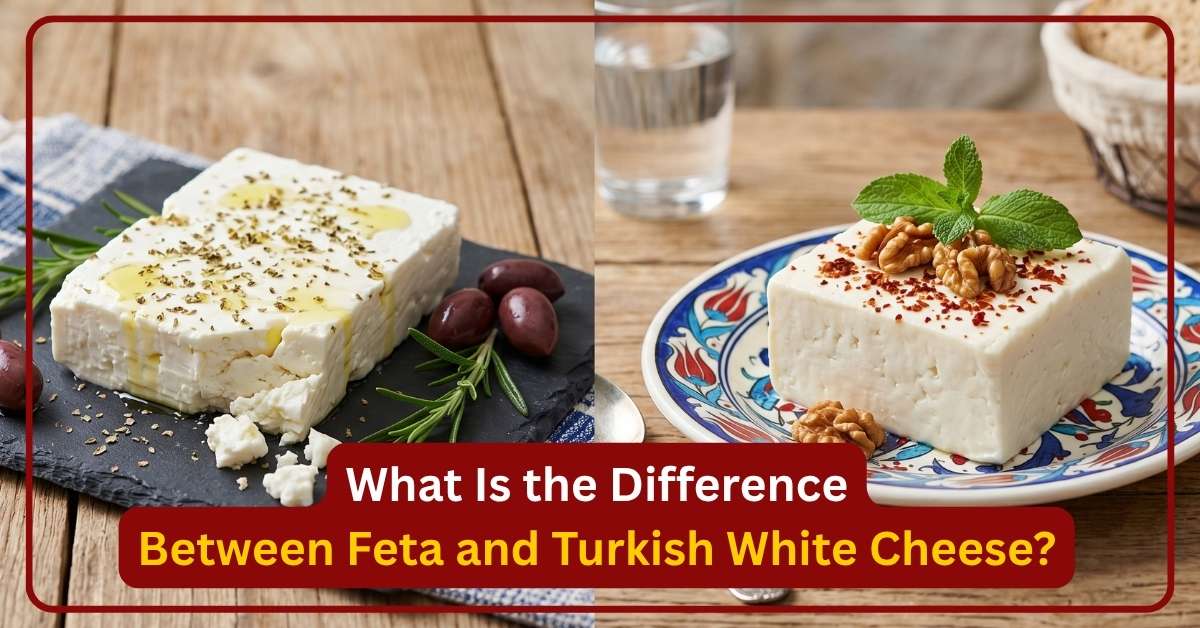
Walk into any Mediterranean restaurant in the USA, and you’ll likely see both feta and Turkish white cheese on the menu. They look similar. They’re both white, salty, and crumbly. So what’s the actual difference?
If you’ve ever stood in the cheese aisle wondering which one to grab, or if you’re curious whether you can swap one for the other in recipes, you’re in the right place. At Istanbul Grill Restaurant, we serve both cheeses daily, and our customers ask us about the differences all the time.
Let’s clear up the confusion once and for all. While feta and Turkish white cheese (beyaz peynir) are cousins in the cheese family, they have distinct differences in taste, texture, production, and how they’re used in cooking. Understanding these differences will help you choose the right cheese for your dish and appreciate the unique qualities of each.
The Quick Answer
- Turkish white cheese (beyaz peynir) is generally milder, creamier, and more versatile than feta. It’s made from sheep, cow, or goat milk and can range from soft and spreadable to firm and crumbly.
- Feta is a protected Greek cheese that must be made in specific regions of Greece from sheep’s milk (or up to 30% goat’s milk). It’s tangier, saltier, drier, and has a more pronounced flavor than most Turkish white cheeses.
Think of it this way: Turkish white cheese is the gentle, approachable cousin, while feta is the bold, assertive relative who commands attention.
What Is Turkish White Cheese (Beyaz Peynir)?
Turkish white cheese, known as “beyaz peynir” (literally “white cheese”), is Turkey’s most popular cheese. You’ll find it on every Turkish breakfast table, stuffed into pastries, crumbled over salads, and served as part of meze spreads.
How It’s Made: Turkish white cheese is a brined cheese made from sheep’s milk, cow’s milk, goat’s milk, or a blend of all three. The milk is heated, cultures and rennet are added to form curds, then the curds are cut, drained, pressed into blocks, and aged in saltwater brine for at least three months.
The flexibility in milk types means Turkish white cheese comes in many varieties with different flavors and textures. Higher fat versions (usually from sheep’s milk) are creamier and smoother. Lower fat versions (often cow’s milk) tend to be firmer and more crumbly.
Regional Varieties: Turkey has dozens of regional beyaz peynir varieties, but a few stand out:
- Ezine Cheese – From Çanakkale province, made from a blend of sheep and goat’s milk. Widely considered the finest Turkish white cheese with rich, creamy flavor.
- Edirne Cheese – From the Thrace region, known for being particularly smooth and mild.
- Van Herbed Cheese (Otlu Peynir) – Contains up to 25 different wild herbs, giving it complex, earthy flavors.
- Tulum Cheese – Traditionally aged in goatskin bags, giving it a unique tangy flavor.
What Is Feta Cheese?
Feta is Greece’s most famous cheese and has Protected Designation of Origin (PDO) status in the European Union. This means that only cheese made in specific regions of Greece using traditional methods can legally be called “feta.”
How It’s Made: Authentic feta must be made from sheep’s milk or a mixture of sheep’s milk with up to 30% goat’s milk. By EU law established in 2002, feta cannot use cow’s milk and cannot contain preservatives or additives beyond milk, salt, and rennet. The cheese is aged in brine for a minimum of two months, though many producers age it longer for more intense flavor.
Production Regions: Real feta comes from Macedonia, Thessaly, Epirus, and certain parts of Central Greece and the Peloponnese. The specific terroir—the combination of climate, pastures, and traditional methods—gives Greek feta its distinctive character.
Texture and Flavor: Feta has a grainy, crumbly texture that breaks apart into shards. It’s drier than Turkish white cheese, with a pronounced salty and tangy flavor that can range from mild to quite sharp depending on aging time.
Side-by-Side Comparison
Turkish White Cheese (Beyaz Peynir)
- Origin: Turkey (various regions throughout the country)
- Milk Type: Sheep, cow, goat, or blend of all three
- Texture: Smooth to crumbly, noticeably moister
- Flavor: Mild to moderate, less salty than feta
- Color: Bright white
- Fat Content: Varies widely (15-25% depending on milk type)
- Aging: 3+ months (varies by producer)
- Additives: Sometimes allowed
- Price (USA): $8-12 per pound
- Availability: Specialty stores, Turkish and Middle Eastern markets
Feta Cheese
- Origin: Greece (PDO protected – only certain regions)
- Milk Type: Sheep or maximum 30% goat (no cow milk allowed)
- Texture: Dry, grainy, very crumbly
- Flavor: Bold, tangy, very salty
- Color: Slightly off-white
- Fat Content: Usually 21-25%
- Aging: Minimum 2 months (often longer for sharper flavor)
- Additives: Not allowed (strict PDO rules)
- Price (USA): $10-16 per pound
- Availability: Widely available in supermarkets nationwide
Nutritional Comparison
Here’s how these cheeses stack up nutritionally per 100 grams (about 3.5 ounces):
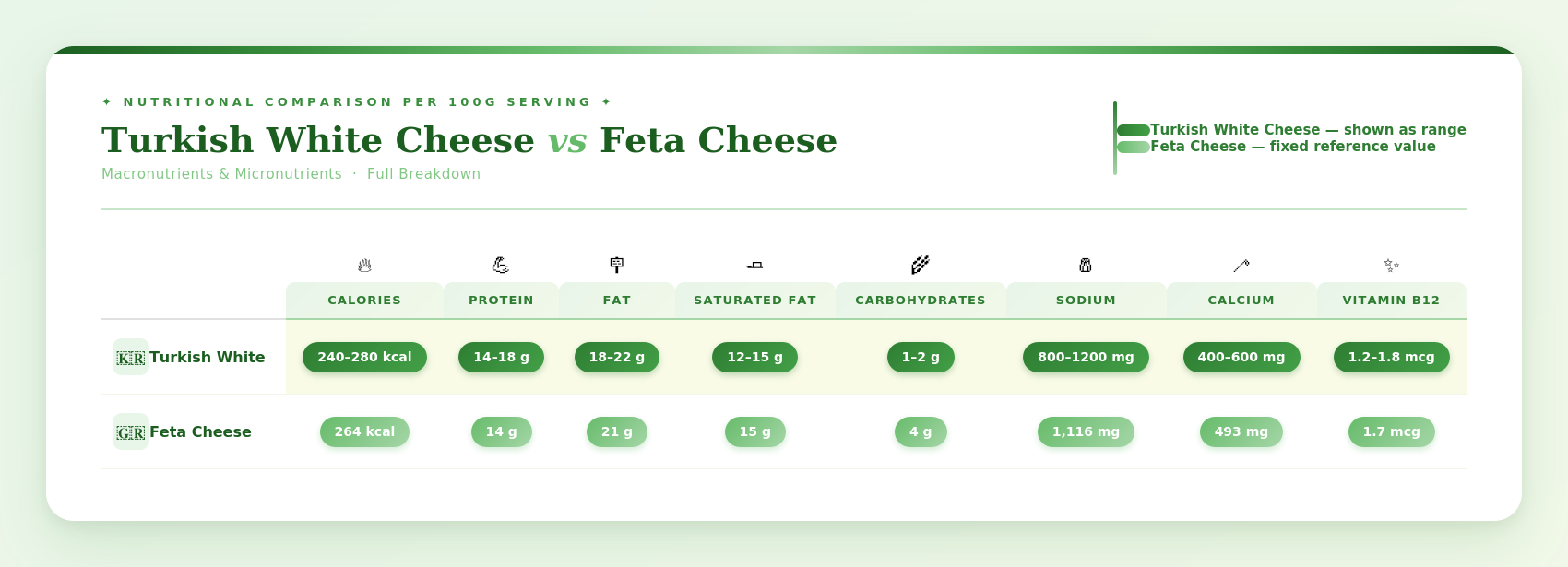
Note: Turkish white cheese values vary more because it can be made from different milk types. Sheep’s milk versions are higher in fat and calories, while cow’s milk versions are lower.
According to the USDA FoodData Central, both cheeses are excellent sources of protein, calcium, and vitamin B12, making them nutritious choices when consumed in moderation.
Taste and Texture: The Real Differences
Let’s talk about what you actually experience when you taste these cheeses.
Turkish White Cheese: When you bite into Turkish white cheese, the first thing you notice is its creamy, smooth texture. It’s moist and holds together well. The flavor is mild and pleasantly salty without being overwhelming. Some varieties have a slight tang, but it’s gentle—not the sharp punch you get from feta. The creamier versions almost melt on your tongue, while firmer varieties have a pleasant, clean bite.
At Istanbul Grill Restaurant, we use Turkish white cheese for dishes where we want cheese flavor without overpowering other ingredients. It adds richness and saltiness while letting the vegetables, herbs, and spices shine through.
Feta Cheese: Feta announces itself immediately. The texture is drier and grainier—it crumbles easily and has almost a chalky quality. The flavor is assertively salty and tangy with a sharp, almost lemony brightness. Good feta has complex flavors that develop as you chew, with earthy, sometimes slightly peppery notes. The saltiness lingers on your palate.
Feta demands attention. It’s the star of any dish it’s in, not a supporting player.
How They’re Used in Cooking
Turkish White Cheese in Turkish Cuisine
- Turkish Breakfast (Kahvaltı): Turkish white cheese is the cornerstone of the traditional Turkish breakfast spread. It’s served in thick slices or crumbled, alongside olives, tomatoes, cucumbers, fresh bread, butter, honey, and tea. The mild flavor makes it perfect for spreading on bread or eating with sweet accompaniments.
- Börek (Savory Pastries): Beyaz peynir is the go-to cheese for börek—flaky pastries filled with cheese, spinach, or potatoes. Its mild flavor and good melting properties make it ideal for baking. When heated, it becomes creamy without getting greasy or separating.
- Menemen (Turkish Scrambled Eggs): Crumbled Turkish white cheese is often added to menemen, giving the scrambled eggs a creamy, salty boost without overpowering the tomatoes and peppers.
- Salads and Meze: Cubed or crumbled beyaz peynir appears in chopped salads (çoban salatası) and as part of meze spreads. Its mild flavor complements rather than competes with fresh vegetables.
Feta in Greek Cuisine
- Greek Salad (Horiatiki): Thick slabs of feta crown the classic Greek salad, where its bold, salty flavor stands up to ripe tomatoes, cucumbers, onions, and kalamata olives. The cheese’s assertiveness is essential to the dish’s balance.
- Spanakopita: Feta mixed with spinach and herbs creates the filling for this famous phyllo pastry. The cheese’s strong flavor cuts through the mild spinach and buttery pastry layers.
- Baked Feta: Feta holds its shape when baked, making it perfect for baking whole in olive oil with tomatoes and herbs. The cheese softens but doesn’t completely melt, creating a creamy, tangy spread.
- Pasta and Rice Dishes: Crumbled feta adds instant flavor to pasta salads, rice dishes, and grain bowls. A little goes a long way because of its intensity.
Can You Substitute One for the Other?
Short answer: Sometimes, but not always.
When Turkish White Cheese Works Instead of Feta:
- Baked pastries like börek or spanakopita (actually works better!)
- Breakfast spreads and sandwiches
- Dishes where you want milder cheese flavor
- When cooking for people who find feta too salty
When Feta Works Instead of Turkish White Cheese:
- Greek salads and Mediterranean dishes where bold flavor is key
- Cold applications where the cheese won’t be heated
- When you want the cheese to be the flavor star
- Crumbling over finished dishes for a salty kick
When They’re NOT Interchangeable:
- Don’t use feta on Turkish breakfast tables—too strong for the morning
- Don’t use Turkish white cheese in authentic Greek salad—too mild
- For baking, Turkish white cheese usually performs better
- For cold dishes, feta often provides better flavor impact
Shopping Guide for USA Consumers
Finding these cheeses in America is easier than ever, but knowing where to look and what to buy makes all the difference.
Where to Buy Turkish White Cheese:
- Turkish or Middle Eastern grocery stores (best selection and prices)
- Whole Foods and specialty cheese shops
- Online retailers like igourmet.com or Amazon
- Some well-stocked regular supermarkets in diverse neighborhoods
Brands to Look For:
- Pinar (widely available, good quality)
- Tahsildaroglu (premium option)
- Sütaş (good value)
- Any cheese labeled “Ezine Peyniri” (top quality)
Where to Buy Feta:
- Any major supermarket
- Whole Foods and Trader Joe’s have excellent options
- Greek specialty stores for authentic imported versions
- Farmers markets often have local artisanal versions
Brands to Look For:
- Dodoni (authentic Greek, PDO protected)
- Mt. Vikos (excellent quality)
- Valbreso (French, but traditional style)
- Look for “Product of Greece” on the label for authentic feta
How to Store These Cheeses
Proper storage keeps your cheese fresh and flavorful for weeks.
Both Cheeses: Keep cheese submerged in brine (saltwater). If you buy cheese in brine, keep it in that liquid. If it comes vacuum-sealed or in packaging without brine, make your own by dissolving 2 tablespoons of salt in 2 cups of water.
Store in an airtight container in the refrigerator. Change the brine every week or so if you notice it getting cloudy.
Shelf Life:
- In brine: 4-6 weeks in the refrigerator
- Out of brine: 5-7 days (will dry out quickly)
- Frozen: 2-3 months (texture changes but flavor remains)
Pro Tip from Istanbul Grill: Don’t throw away the brine! It’s great for marinating vegetables, adding to salad dressings, or using in bread dough for extra flavor.
The Bottom Line: Which Cheese Should You Choose?
There’s no wrong choice—just different situations where each cheese shines.
Choose Turkish White Cheese When:
- Making Turkish breakfast or börek
- You want mild, creamy cheese flavor
- Baking cheese into pastries
- Cooking for people who find feta too strong
- You want cheese that pairs well with sweet foods (honey, jam, fruit)
- Looking for a more affordable option
Choose Feta When:
- Making Greek salad or Mediterranean dishes
- You want bold, assertive cheese flavor
- Crumbling over finished dishes for impact
- The recipe specifically calls for feta
- You want cheese that stands out as the star ingredient
- You prefer drier, crumblier texture
The Real Secret from Istanbul Grill: Keep both in your refrigerator! They serve different purposes and having both on hand means you’re ready for any recipe. Turkish white cheese for your morning toast and mild applications, feta for salads and dishes that need a flavor punch.
At the end of the day, both cheeses are delicious representatives of rich Mediterranean cheese-making traditions. Whether you’re team feta or team beyaz peynir, you’re experiencing centuries of culinary heritage in every bite.
Next time you’re at Istanbul Grill Restaurant, ask us which cheese we used in your dish—we love talking about the differences and helping our guests discover new favorites. And if you haven’t tried both cheeses yet, now you know exactly what makes each one special and how to use them in your own kitchen.
Your turn: Have you tried both feta and Turkish white cheese? Which do you prefer, and how do you use it? Share your experiences in the comments below!