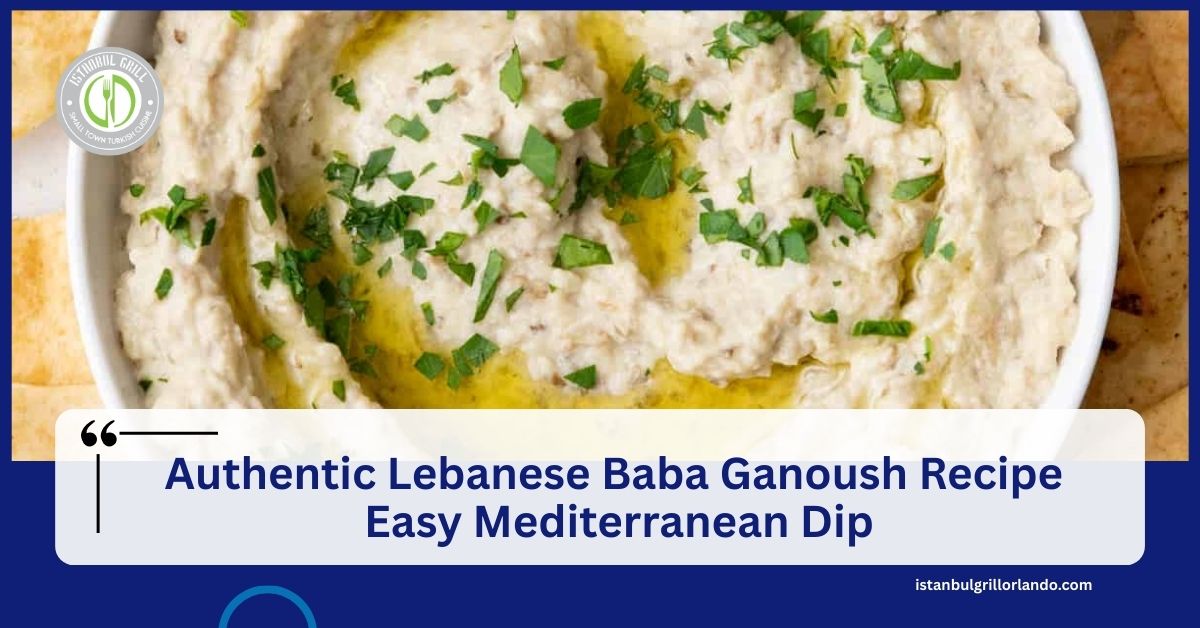
Have you ever tasted a dip so creamy and smoky that you could not stop eating it? That is baba ganoush, and once you try homemade baba ganoush, you will never want the store-bought version again.
At Istanbul Grill Restaurant, we have served authentic Lebanese baba ganoush to thousands of Americans who fall in love with this smoky eggplant dip. Today, we are sharing our family recipe so you can make restaurant-quality baba ganoush right in your own kitchen.
This dip is surprisingly simple to make. You only need a few ingredients, and the process takes less than an hour from start to finish. The secret is in how you prepare the eggplant, and we will show you exactly how to do it.
What is Baba Ganoush?
Baba ganoush is a creamy Middle Eastern dip made from roasted eggplant mixed with tahini, lemon juice, garlic, and olive oil. The name “baba ganoush” means “spoiled father” in Arabic. The story goes that this dip is so delicious, it makes you feel pampered and spoiled, just like a beloved father spoils his children.
Some people call it baba ghanouj, moutabal, or mutabbal. All these names refer to the same wonderful dip, with small differences depending on which country you are in.
The most important aspect of baba ganoush is its smoky flavor. This comes from charring the eggplant over an open flame or under a very hot broiler. The charred skin gives the eggplant flesh a deep, smoky taste that makes this dip special.
Think of baba ganoush as eggplant’s answer to hummus. While hummus uses chickpeas as the main ingredient, baba ganoush uses roasted eggplant. Both dips share similar ingredients like tahini, lemon, and garlic, which is why they taste so good together on a mezze platter.
Why You Will Love This Recipe
This baba ganoush recipe from Istanbul Grill Restaurant stands out for several reasons.
First, it uses traditional Lebanese methods that have been passed down through generations. We do not cut corners or add unnecessary ingredients. This is the real deal.
Second, we give you three different ways to cook the eggplant. You can use your oven, your stove top, or your outdoor grill. Each method works perfectly, so you can choose based on what equipment you have available.
Third, this recipe is naturally healthy. Eggplant is low in calories but high in fiber and antioxidants. The tahini adds protein and healthy fats. You get a nutritious dip that tastes indulgent without any guilt.
Fourth, this dip works for almost any diet. It is naturally vegetarian, and you can easily make it vegan by skipping the optional yogurt. It contains no gluten, no dairy (unless you add yogurt), and no processed ingredients.
Finally, Americans love this dip because it pairs perfectly with so many foods. Serve it with pita bread, crackers, fresh vegetables, or use it as a spread in sandwiches and wraps.
Understanding Lebanese Food Culture
In Lebanese homes and restaurants, baba ganoush is not just a dip. It is part of the mezze tradition, which means small plates served before the main meal.
When you visit a Lebanese family for dinner, the table fills with many small dishes. You might see hummus, tabbouleh salad, stuffed grape leaves, olives, pickles, fresh vegetables, and of course, baba ganoush. Everyone shares these dishes, talking and laughing while they eat.
This tradition of sharing food brings people together. At Istanbul Grill Restaurant, we see this happen every day. Families and friends gather around our tables, passing plates back and forth, trying a little bit of everything.
Baba ganoush has been made in Lebanon and surrounding countries for hundreds of years. Eggplants grow very well in the Mediterranean climate, so cooks have always found creative ways to use them. This dip became popular because it uses simple ingredients that most families always had on hand.
The French were so impressed with this dip that they started calling it “caviar d’aubergines,” which means eggplant caviar. This fancy name shows how much they respected this humble eggplant dip.
What You Need to Make Baba Ganoush
The beauty of this recipe is how few ingredients you need. Everything is simple and easy to find at any American grocery store.
Main Ingredients:
Eggplants – You need 2 medium eggplants. Look for eggplants that feel heavy for their size and have smooth, shiny, dark purple skin. When you gently press the eggplant, it should feel firm with very little give. Avoid eggplants with wrinkled skin, brown spots, or soft areas because these are old and might taste bitter.
Smaller eggplants usually have fewer seeds inside, which is better for this recipe. The flesh is also more tender and less likely to taste bitter. Italian eggplants or small globe eggplants work best.
Tahini – You need half a cup of tahini. Tahini is a paste made from ground sesame seeds. It looks like peanut butter but tastes nutty and slightly bitter in a good way. You can find tahini in the international food section of most supermarkets, near the peanut butter, or in health food stores.
Make sure to buy tahini that has only one ingredient listed: sesame seeds. Some brands add oil or sugar, but pure tahini tastes better. Before you measure tahini, stir it very well because the oil separates and floats to the top during storage.
Fresh Lemon – You need the juice from one large lemon, which is about 3 to 4 tablespoons. Always use fresh lemon juice, never the bottled kind. Fresh lemon juice is bright and tangy, while bottled lemon juice tastes flat and artificial.
Garlic – You need 2 garlic cloves, or just 1 if you do not like strong garlic flavor. Use fresh garlic cloves, not the pre-minced garlic in jars. Fresh garlic has much more flavor and makes a big difference in the final taste.
Salt – You need 1 teaspoon of salt to start, then you can add more if needed. Use kosher salt, sea salt, or regular table salt. Kosher salt has a cleaner taste, but any salt works fine.
Olive Oil – You need a few tablespoons of good extra virgin olive oil for drizzling on top. Use the best olive oil you have because you will taste it. A fruity, peppery olive oil makes this dip taste amazing.
Optional Ingredients:
Plain Greek Yogurt – One or two tablespoons of yogurt makes the dip extra creamy and gives it a brighter color. This is optional and makes the dip thicker. If you want vegan baba ganoush, skip the yogurt.
Black Pepper – A few grinds of black pepper add a little spice.
Pomegranate Seeds – These bright red seeds look beautiful on top and add a sweet-tart pop of flavor.
Fresh Parsley – Chopped parsley adds color and fresh flavor.
Sumac – This is a tangy Middle Eastern spice that looks like ground red pepper. It adds a lemony flavor.
Pine Nuts – Toasted pine nuts on top add crunch and a buttery taste.
Equipment You Need
You do not need fancy equipment to make baba ganoush. Here is what helps:
A pair of metal tongs for turning the eggplant while it cooks
A colander for draining the cooked eggplant
A large mixing bowl
A fork or potato masher for mashing the eggplant
A sharp knife and cutting board
A spoon for mixing
A serving plate or bowl
Optional: a garlic press or microplane grater for the garlic
You do NOT need a food processor or blender. Traditional Lebanese baba ganoush is mixed by hand, which gives it a better texture.
How to Pick the Best Eggplant
Many people tell us they tried making baba ganoush at home and it turned out bitter. The problem is usually the eggplant, not the recipe. Here is how to pick good eggplants every time.
Look at the skin. The skin should be smooth, shiny, and deep purple. Dull skin means the eggplant is old.
Check for blemishes. Avoid eggplants with brown spots, cuts, or wrinkled areas. These spots mean the eggplant is going bad.
Feel the weight. Pick up the eggplant. It should feel heavy for its size. A light eggplant is dried out inside.
Press gently. When you press the eggplant with your thumb, it should feel firm. If your thumb leaves a dent that stays, the eggplant is too ripe.
Check the stem. The green stem on top should look fresh, not dried out and brown.
Choose smaller sizes. Smaller and medium eggplants have fewer seeds and more tender flesh. Very large eggplants often have tough, bitter flesh with lots of seeds.
Look at the shape. Narrower, more elongated eggplants usually have fewer seeds than round, fat ones.
At Istanbul Grill Restaurant, we check every eggplant before we buy it. This careful selection makes a huge difference in the final taste of the dip.
Three Ways to Cook Your Eggplant
The cooking method you choose changes the flavor of your baba ganoush. We will teach you all three methods so you can pick the one that works best for you.
Method 1: Gas Stove Top (Most Traditional)
This method gives you the smokiest, most authentic flavor. If you have a gas stove, this is the way to go.
Step 1: Turn one burner on your gas stove to medium-high heat.
Step 2: Using a knife or fork, poke 3 or 4 small holes in each eggplant. This lets steam escape so the eggplant does not explode.
Step 3: Place one eggplant directly on the metal grate over the flame. Yes, put it right on the flame!
Step 4: Let the eggplant cook without moving it for about 5 minutes. The skin will start to blacken and char.
Step 5: Use metal tongs to turn the eggplant. Cook another 5 minutes.
Step 6: Keep turning the eggplant every 5 minutes until the entire skin is charred black and the eggplant feels very soft when you press it gently with the tongs. This takes about 20 minutes total.
Step 7: The eggplant will deflate and collapse as it cooks. This is exactly what you want.
Step 8: Repeat with the second eggplant.
Pro tip: This method makes a mess on your stove. You can cover the area around the burner with aluminum foil before you start. The foil catches the drips and makes cleanup much easier.
Method 2: Outdoor Grill (Great for Summer)
If you are already grilling dinner outside, this method adds incredible smoky flavor with no extra work.
Step 1: Heat your grill to medium-high heat, about 400 degrees.
Step 2: Poke 3 or 4 holes in each eggplant with a knife or fork.
Step 3: Place the whole eggplants directly on the hot grill grates.
Step 4: Close the grill lid and let them cook for 5 minutes.
Step 5: Open the lid and use tongs to turn the eggplants.
Step 6: Close the lid and cook another 5 minutes.
Step 7: Keep turning every 5 minutes until the skin is completely charred and the eggplants are very soft. This takes about 20 to 25 minutes.
Step 8: The eggplants should look completely black and collapsed when they are done.
Pro tip: Grill extra eggplants while you are at it. You can freeze the cooked eggplant flesh and use it later to make baba ganoush quickly.
Method 3: Oven Broiler (Easiest Cleanup)
This method takes longer but requires almost no attention and makes zero mess.
Step 1: Move your oven rack to the highest position, about 4 inches below the broiler.
Step 2: Turn your broiler to high.
Step 3: Line a baking sheet with aluminum foil or parchment paper.
Step 4: Poke 3 or 4 holes in each eggplant.
Step 5: Place the whole eggplants on the prepared baking sheet.
Step 6: Put the baking sheet in the oven under the broiler.
Step 7: Let the eggplants broil for 15 minutes without opening the oven.
Step 8: Open the oven and use tongs to turn the eggplants over.
Step 9: Broil another 15 minutes.
Step 10: Check if the eggplants are very soft by gently pressing with the tongs. If they still feel firm, broil another 5 to 10 minutes.
Step 11: The total time is usually 30 to 40 minutes. The skin should be blistered and dark brown (it will not get as black as with the other methods, and that is okay).
Pro tip: This method gives you less smoky flavor than the gas stove or grill, but it is much easier and cleaner. The dip still tastes delicious.
Step-by-Step Instructions for Making Baba Ganoush
Now that your eggplants are cooked, here is how to turn them into creamy, delicious dip.
Step 1: Take the hot eggplants off the heat and place them in a colander set over a bowl or in your sink.
Step 2: Use a knife to cut a slit down the length of each eggplant to open them up. This helps them cool faster and lets the liquid drain out.
Step 3: Use the back of a spoon to gently press down on the eggplants. You will see liquid drip out. This step is very important because watery eggplant makes watery, bland baba ganoush.
Step 4: Let the eggplants sit in the colander for 10 to 15 minutes until they are cool enough to touch and most of the liquid has drained out.
Step 5: Once the eggplants are cool, use your fingers to peel off all the charred black skin. The skin should come off very easily. Throw the skin away.
Step 6: Also remove the green stem end from each eggplant and throw it away.
Step 7: Open up the eggplant flesh and look for lines of seeds. These seeds taste bitter, so you want to remove as many as you can. Use your fingers or a spoon to gently pull out the seed sections. Do not worry if you cannot get every single seed, just get most of them.
Step 8: Put the eggplant flesh in your large mixing bowl.
Step 9: Use a fork, potato masher, or the back of a spoon to mash the eggplant into smaller pieces. You do not want it completely smooth like baby food. Leave some small chunks for texture. Mash for about 1 minute.
Step 10: Add the tahini to the bowl. Remember to stir your tahini jar first before measuring.
Step 11: Squeeze the lemon and add the fresh lemon juice to the bowl.
Step 12: Peel your garlic cloves and chop them very fine, or use a garlic press, or grate them with a microplane grater. Add the garlic to the bowl.
Step 13: Add the salt to the bowl.
Step 14: If you are using Greek yogurt, add 1 or 2 tablespoons now.
Step 15: If you want black pepper, add a few grinds now.
Step 16: Use a wooden spoon or regular spoon to mix everything together. Stir gently for about 1 minute until all the ingredients are combined well.
Step 17: Taste the baba ganoush. Does it need more lemon? More salt? More garlic? Adjust the flavors to your liking. This tasting and adjusting step is very important.
Step 18: If the dip seems too thick, add a tablespoon of water or olive oil and stir.
Step 19: Cover the bowl with plastic wrap or a lid.
Step 20: Put the bowl in your refrigerator for at least 30 minutes. Chilling helps the flavors blend together and makes the dip thicker. If you can wait a full hour, even better.
Step 21: When you are ready to serve, take the baba ganoush out of the refrigerator.
Step 22: Spoon the dip onto a serving plate or into a shallow serving bowl.
Step 23: Use the back of your spoon to make swirls and little valleys in the top of the dip. This is not just for looks—the valleys hold the olive oil.
Step 24: Drizzle a generous amount of your best olive oil over the top. Do not skip this step. The olive oil adds so much flavor.
Step 25: If you have pomegranate seeds, sprinkle a small handful on top for color and taste.
Step 26: If you have fresh parsley, chop it and sprinkle it on top.
Step 27: You can also add toasted pine nuts or a sprinkle of sumac if you like.
Step 28: Serve immediately with warm pita bread, pita chips, or fresh vegetables.
Why Hand Mixing is Better Than a Food Processor
Many recipes tell you to put everything in a food processor and blend it smooth. At Istanbul Grill Restaurant, we never do this. Here is why hand mixing is better.
First, hand mixing gives you better texture. When you mash by hand, you get a creamy dip with small pieces of eggplant throughout. This rustic texture is how authentic Lebanese baba ganoush should look and feel in your mouth.
Second, food processors make the dip too smooth and can make it watery. The fast blades break down the eggplant cells and release more liquid, which makes your dip thin and runny.
Third, the food processor can turn your beautiful smoky eggplant into something that looks like baby food. The color becomes dull and the texture becomes gluey.
Fourth, hand mixing lets you control the texture exactly. You can mash more if you want it smoother, or mash less if you like it chunkier.
That said, if you really want to use a food processor, you can. Just pulse it only 3 or 4 times to roughly combine the ingredients. Do not let it run continuously or you will end up with eggplant soup.
Cooking Method Comparison
Here is a quick comparison to help you choose which cooking method works best for your situation.
Gas Stove Top:
- Time needed: 20 minutes
- Smoky flavor: Very strong (best)
- Cleanup: Messy (but worth it)
- Difficulty: Medium
- Best for: When you want the most authentic taste
Outdoor Grill:
- Time needed: 25 minutes
- Smoky flavor: Very strong (best)
- Cleanup: Easy
- Difficulty: Easy
- Best for: Summer cookouts when the grill is already hot
Oven Broiler:
- Time needed: 40 minutes
- Smoky flavor: Mild
- Cleanup: Very easy
- Difficulty: Very easy
- Best for: Beginners or when you want less mess
All three methods make delicious baba ganoush. Pick the one that fits your schedule and equipment.
Common Mistakes and How to Avoid Them
Over the years at Istanbul Grill Restaurant, we have seen people make the same mistakes with this recipe. Here is how to avoid them.
Mistake 1: Not draining the eggplant well enough
This is the biggest mistake. If you skip the draining step or do not drain long enough, your baba ganoush will be watery and taste weak.
Solution: Always let the cooked eggplant sit in a colander for at least 10 minutes. Press down on it to squeeze out extra liquid.
Mistake 2: Not removing the seeds
Eggplant seeds taste bitter. If you leave all the seeds in, your dip might taste unpleasantly bitter.
Solution: Take an extra 2 minutes to pull out the visible seed lines. You do not need to get every single seed, just the obvious ones.
Mistake 3: Using old or large eggplants
Old eggplants and very large eggplants have more seeds and bitter flesh.
Solution: Choose firm, shiny, medium-sized eggplants at the store.
Mistake 4: Not charring the eggplant enough
If the eggplant skin is only lightly browned, you miss out on that smoky flavor that makes this dip special.
Solution: Cook the eggplant until the skin is very dark and charred. The eggplant should feel very soft and collapsed.
Mistake 5: Using bottled lemon juice
Bottled lemon juice tastes flat and artificial. It makes your whole dip taste dull.
Solution: Always use fresh squeezed lemon juice from a real lemon.
Mistake 6: Not stirring the tahini before using it
Tahini separates in the jar with oil floating on top. If you scoop from the top, you get only oil. If you scoop from the bottom, you get only thick paste.
Solution: Stir your tahini jar very well before you measure. You want a smooth, evenly mixed tahini.
Mistake 7: Serving it straight from the refrigerator
Cold dip tastes muted because cold temperatures hide flavors.
Solution: Take the dip out of the refrigerator 10 minutes before serving. Let it sit at room temperature so the flavors wake up.
Mistake 8: Not tasting and adjusting
Every eggplant is slightly different. Every lemon has different acidity. You need to taste and adjust.
Solution: Always taste your baba ganoush before serving. Add more lemon if it tastes flat, more salt if it tastes bland, or more tahini if it tastes too lemony.
Mistake 9: Using a food processor on high speed
This makes the texture wrong and can make the dip watery.
Solution: Mix by hand with a spoon or fork. If you must use a food processor, only pulse a few times.
Mistake 10: Forgetting the olive oil on top
The olive oil drizzle is not just decoration. It adds flavor and richness.
Solution: Always drizzle good olive oil generously on top before serving.
Troubleshooting Guide
Sometimes things go wrong. Here is how to fix common problems.
Problem: My baba ganoush tastes bitter.
Causes: Old eggplant, too many seeds left in, or not enough lemon/salt.
Solutions:
- Next time, use fresher, smaller eggplants
- Make sure to remove the visible seed lines
- Add more lemon juice, one tablespoon at a time, and taste
- Add a little more salt
- Add an extra spoonful of tahini to balance the bitterness
Problem: My baba ganoush is too watery.
Causes: Did not drain the eggplant enough, or used a food processor too much.
Solutions:
- Put the dip in a fine mesh strainer over a bowl and let it sit in the refrigerator for 30 minutes. The excess water will drip out.
- Stir in an extra tablespoon or two of tahini to thicken it
- Next time, drain the eggplant longer and press harder to remove liquid
Problem: My baba ganoush is too thick.
Causes: Not enough liquid ingredients, or it sat too long in the refrigerator.
Solutions:
- Stir in water, one tablespoon at a time, until you reach the texture you want
- Add a little more lemon juice
- Add a tablespoon of olive oil and mix well
Problem: My baba ganoush tastes bland.
Causes: Not enough salt, lemon, or garlic.
Solutions:
- Add more salt, a pinch at a time, and taste after each addition
- Squeeze in more fresh lemon juice
- Add another small garlic clove, minced fine
- Make sure you drizzled good olive oil on top
Problem: My baba ganoush does not taste smoky.
Causes: Did not char the eggplant enough, or used only the oven method.
Solutions:
- Next time, cook the eggplant until the skin is very dark and charred
- Try the gas stove top or grill method for more smoke flavor
- If using the oven, turn on the broiler to high and get the eggplant as close to the heat as possible
Problem: My eggplant exploded while cooking.
Causes: Did not poke holes in it before cooking.
Solutions:
- Always poke 3 or 4 holes in the eggplant before putting it on heat
- Next time, remember this step and you will be fine
- If it already exploded, just clean up the mess and continue with the recipe. The eggplant is still usable.
How to Store Baba Ganoush
Proper storage keeps your baba ganoush fresh and tasty for several days.
Refrigerator Storage:
Put your baba ganoush in an airtight container. Glass containers with tight lids work best because they do not absorb odors or stain.
Press a piece of plastic wrap directly on the surface of the dip before putting the lid on. This prevents air from touching the dip and keeps it from drying out.
Store in the refrigerator for up to 4 days.
Important note about garlic: If you used fresh garlic in your recipe, eat the dip within 2 days. Garlic stored in olive oil at room temperature can grow dangerous bacteria. While your dip is refrigerated which slows bacteria growth, it is still safer to eat it quickly when it contains fresh garlic.
If you want your baba ganoush to last longer, you can make it without garlic. Add fresh minced garlic just to the portion you plan to eat that day.
Freezer Storage:
You can freeze baba ganoush, but the texture changes slightly when you thaw it. The dip becomes a bit more watery and less creamy.
If you want to freeze it anyway, here is how:
- Put the dip in a freezer-safe airtight container
- Leave half an inch of space at the top because the dip expands when frozen
- Write the date on the container
- Freeze for up to 3 months
To thaw: Put the frozen container in the refrigerator overnight. The next day, drain off any water that separated, then stir the dip very well. Add a spoonful of tahini if it seems too thin.
Freezing Cooked Eggplant:
A better freezing option is to freeze just the cooked eggplant flesh before you mix it with other ingredients.
After you char and peel the eggplants, put the flesh in a freezer bag. Squeeze out all the air and seal. Write the date on the bag. Freeze for up to 3 months.
When you want to make baba ganoush, thaw the eggplant, drain it well, then mix it with fresh tahini, lemon, and garlic. This method gives you better results than freezing the finished dip.
Before Serving Stored Dip:
Always take baba ganoush out of the refrigerator 10 to 15 minutes before serving. Cold dip does not taste as good because cold temperatures hide flavors.
Stir the dip well before serving because the oil and other ingredients might have separated.
Taste it and add more lemon juice or salt if needed. Flavors become muted after storage.
Drizzle fresh olive oil on top to make it look and taste freshly made.
Make-Ahead Tips for Entertaining
If you are having guests over, you can prepare parts of this recipe ahead of time to make your life easier.
Two Days Before:
Roast the eggplants using any method. After they cool, peel them, remove seeds, and put the flesh in an airtight container. Store in the refrigerator for up to 2 days.
One Day Before:
Make the complete baba ganoush recipe but do not add the garlic yet. Store in an airtight container in the refrigerator.
The next day, take out the dip, stir it well, add fresh minced garlic, taste and adjust seasonings, then transfer to your serving dish.
Morning Of Your Party:
Make the complete recipe including garlic. Store it covered in the refrigerator.
One hour before guests arrive, take it out and let it come to room temperature.
Right before serving, transfer to your serving plate, make swirls on top, and add the olive oil drizzle and garnishes.
Pro tip from Istanbul Grill Restaurant:
We always garnish the dip right before serving, never ahead of time. Fresh garnishes like parsley and pomegranate seeds look and taste much better when they are just added.
Serving Suggestions
Baba ganoush works in so many different ways. Here are our favorite serving ideas from Istanbul Grill Restaurant.
As a Traditional Dip:
Serve with warm pita bread cut into wedges. You can buy pita bread at any grocery store and warm it in your oven for a few minutes.
Serve with store-bought or homemade pita chips. The crispy chips are perfect for scooping.
Serve with fresh raw vegetables like cucumber slices, carrot sticks, celery sticks, bell pepper strips, cherry tomatoes, and radishes.
As a Spread:
Spread baba ganoush on sandwich bread instead of mayo. It adds incredible flavor to turkey sandwiches, grilled vegetable sandwiches, and falafel sandwiches.
Use it inside wraps with grilled chicken, lettuce, tomatoes, and onions.
Spread it on toast for a healthy breakfast or snack. Top with sliced tomatoes and a sprinkle of salt.
As Part of a Mezze Platter:
Create a Middle Eastern appetizer spread with small bowls of baba ganoush, hummus, tabbouleh salad, olives, pickles, stuffed grape leaves, feta cheese, and warm pita bread.
This makes an impressive appetizer for parties. Put everything on a large platter or board and let guests help themselves.
In Bowl Meals:
Make a Mediterranean bowl with a base of rice or quinoa. Add grilled chicken or falafel, chopped cucumber and tomatoes, a big scoop of baba ganoush, and a drizzle of tahini sauce.
This turns the dip into part of a complete, healthy dinner.
As a Side Dish:
Serve baba ganoush alongside grilled lamb chops, chicken kebabs, or beef kofta.
The creamy, cool dip perfectly balances hot, grilled meats.
For Snacking:
Keep a container of baba ganoush in your refrigerator for healthy snacking. Eat it with crackers, pretzels, or vegetable sticks when you need a quick snack.
Party Serving Size Guide
Planning a party and wondering how much baba ganoush to make? Here is our guide from years of catering experience at Istanbul Grill Restaurant.
For 4 to 6 people (small gathering):
- Make this recipe as written with 2 eggplants
- This gives you about 2 cups of dip
- Perfect for a small dinner party
For 8 to 12 people (medium party):
- Double the recipe, using 4 eggplants
- This gives you about 4 cups of dip
- Good for a casual get-together where you are serving other appetizers too
For 15 to 20 people (large party):
- Triple the recipe, using 6 eggplants
- This gives you about 6 cups of dip
- Plan on this if baba ganoush is the main appetizer
For 25 to 50 people (very large event):
- Make 4 to 5 times the recipe
- Consider making it over two days to spread out the work
- You will need 8 to 10 eggplants
These amounts assume you are serving other foods too. If baba ganoush is the only dip or appetizer, increase these amounts by 50 percent.
Flavor Variations to Try
Once you master the basic recipe, try these variations to keep things interesting.
Extra Garlicky Baba Ganoush:
Use 3 or 4 garlic cloves instead of 2. Garlic lovers will go crazy for this version. Remember, this version must be eaten within 2 days.
Spicy Baba Ganoush:
Add a pinch of cayenne pepper or red pepper flakes to the mix. You can also add one small diced jalapeño pepper if you want more heat.
Herby Baba Ganoush:
Mix in 2 tablespoons of fresh chopped parsley, mint, or cilantro along with the other ingredients. Fresh herbs add brightness and color.
Extra Creamy Baba Ganoush:
Add 3 tablespoons of Greek yogurt instead of just 1 or 2. This makes the dip thicker and tangier. Not vegan, but very delicious.
Lemony Baba Ganoush:
Use the juice of 1 and a half lemons instead of just 1. Add a teaspoon of lemon zest too. This version is very bright and tangy.
Smoky Cumin Baba Ganoush:
Add half a teaspoon of ground cumin to the mix. Cumin adds an earthy, warm flavor that complements the smoky eggplant.
Roasted Red Pepper Baba Ganoush:
Add half a cup of chopped roasted red peppers from a jar. Drain them very well first. This adds sweetness and a beautiful red color throughout the dip.
Pine Nut Baba Ganoush:
Toast a quarter cup of pine nuts in a dry pan until golden brown. Stir half of them into the dip and sprinkle the rest on top before serving. Pine nuts add a buttery crunch.
Health Benefits of Baba Ganoush
This dip is not just delicious. It also offers real health benefits that make it a smart choice for your family.
Eggplant Benefits:
Eggplants are very low in calories. One medium eggplant has only about 35 calories but lots of fiber. This fiber helps your digestion and keeps you feeling full.
Eggplants contain nasunin, an antioxidant found in the purple skin. This antioxidant protects your brain cells and may help with memory.
Eggplants also have vitamins C and K, plus minerals like potassium and manganese.
Tahini Benefits:
Tahini is made from sesame seeds, which are packed with healthy fats. These fats help your heart and reduce inflammation in your body.
Sesame seeds are high in plant-based protein. Two tablespoons of tahini give you about 5 grams of protein.
Tahini contains calcium for strong bones, iron for healthy blood, and magnesium for muscle and nerve function.
Lemon Benefits:
Fresh lemon juice provides vitamin C, which boosts your immune system.
Lemon helps your body absorb iron from other foods better.
The acid in lemon juice aids digestion and makes you feel less bloated.
Garlic Benefits:
Garlic contains compounds that may lower blood pressure and cholesterol.
Garlic has antibacterial and antiviral properties that help fight infections.
Garlic is full of antioxidants that protect your cells from damage.
Olive Oil Benefits:
Extra virgin olive oil is one of the healthiest fats you can eat. It reduces inflammation and protects your heart.
Olive oil helps your body absorb vitamins A, D, E, and K from vegetables.
Studies show that people who eat olive oil regularly live longer and have less disease.
Overall Nutrition:
One serving of baba ganoush (about half a cup) contains approximately:
- Calories: 120
- Fat: 8 grams (mostly healthy fats)
- Carbohydrates: 10 grams
- Protein: 3 grams
- Fiber: 4 grams
- Sugar: 4 grams (natural, from vegetables)
This dip is naturally gluten free, low in sugar, and has no cholesterol. It fits into almost any healthy eating plan.
Comparing Baba Ganoush to Similar Dips
People often wonder how baba ganoush compares to other popular dips. Here is what makes it special.
Baba Ganoush vs Hummus:
Both dips come from the Middle East and use tahini, lemon, and garlic. The main difference is the base ingredient. Hummus uses chickpeas while baba ganoush uses eggplant.
Hummus has more protein because chickpeas are legumes. Baba ganoush has fewer calories and carbohydrates because eggplant is a vegetable.
Hummus tastes nutty and earthy. Baba ganoush tastes smoky and slightly sweet.
Both dips are delicious, and at Istanbul Grill Restaurant, we recommend serving them together. They complement each other perfectly.
Baba Ganoush vs Mutabal:
These names are often used for the same thing, but technically mutabal includes tahini while some versions of baba ganoush do not. Our recipe includes tahini, so you can call it either name.
Baba Ganoush vs Greek Melitzanosalata:
Greek melitzanosalata is also a roasted eggplant dip. However, it usually contains more olive oil and vinegar instead of tahini. It has a different flavor and texture.
Baba ganoush is creamier because of the tahini. Melitzanosalata is lighter and more oil-based.
Baba Ganoush vs Store-Bought Versions:
Store-bought baba ganoush often contains preservatives, extra oils, and added sugars to extend shelf life.
Homemade baba ganoush tastes fresher, has better texture, and lets you control exactly what goes into it.
The cost is about the same, but the quality of homemade is far superior.
Final Thoughts from Istanbul Grill Restaurant
Making authentic Lebanese baba ganoush at home is easier than most people think. You do not need special skills or hard-to-find ingredients. You just need good eggplants, a little patience, and the willingness to get your hands a bit messy.
At Istanbul Grill Restaurant, we have watched thousands of Americans discover this dip for the first time. Their faces light up with that first taste. The smoky, creamy flavor surprises them in the best way. Many of them come back the next week asking for the recipe.
Now you have that recipe. You have all our tips, tricks, and secrets from years of making this dip every single day. You know how to pick the best eggplants, how to cook them three different ways, and how to avoid the common mistakes that lead to bitter or watery dip.
The beauty of baba ganoush is its simplicity. Six basic ingredients come together to create something far greater than the sum of their parts. The charred eggplant brings smokiness. The tahini adds creaminess and depth. The lemon provides brightness. The garlic gives a little kick. The olive oil makes everything rich. The salt ties it all together.
This is the kind of food that brings people together around a table. In Lebanon, Syria, Turkey, and throughout the Middle East, sharing mezze like baba ganoush is how families connect. At Istanbul Grill Restaurant here in America, we see this same tradition continue every day. Friends gather, share small plates, talk and laugh over good food.
When you make this recipe, you are not just making a dip. You are participating in a food tradition that goes back hundreds of years. You are bringing a taste of the Mediterranean to your American kitchen. You are creating something that your family and friends will remember.
Start with this basic recipe. Get comfortable with the technique. Then experiment with the variations. Maybe you will discover you love it extra garlicky. Maybe you will add herbs. Maybe you will create your own special version.
Whatever you do, remember the most important rule: taste and adjust. Every eggplant is different. Every lemon has different acidity. Your palate is unique. Trust your taste buds and adjust the seasonings until the dip tastes perfect to you.
We hope this recipe becomes a regular part of your cooking routine. Make it for parties. Make it for weeknight snacking. Make it when you want to impress dinner guests. Make it simply because you love how it tastes.
Thank you for letting Istanbul Grill Restaurant share this special recipe with you. We hope every bite brings you as much joy as it brings us.
Now go char some eggplants and make the best baba ganoush you have ever tasted. Your kitchen is about to smell amazing.