Are you confused about the difference between vegetarian and vegan diets? You are not alone. Many Americans hear these terms used interchangeably, but they actually mean different things. At Istanbul Grill , customers ask us about this every single day, so today we are clearing up the confusion once and for all.
Both vegetarian and vegan diets focus on plant-based eating, but vegans follow stricter rules about what they can and cannot eat. Understanding these differences helps you make the right choice for your health, values, and lifestyle.
What is a Vegetarian Diet?
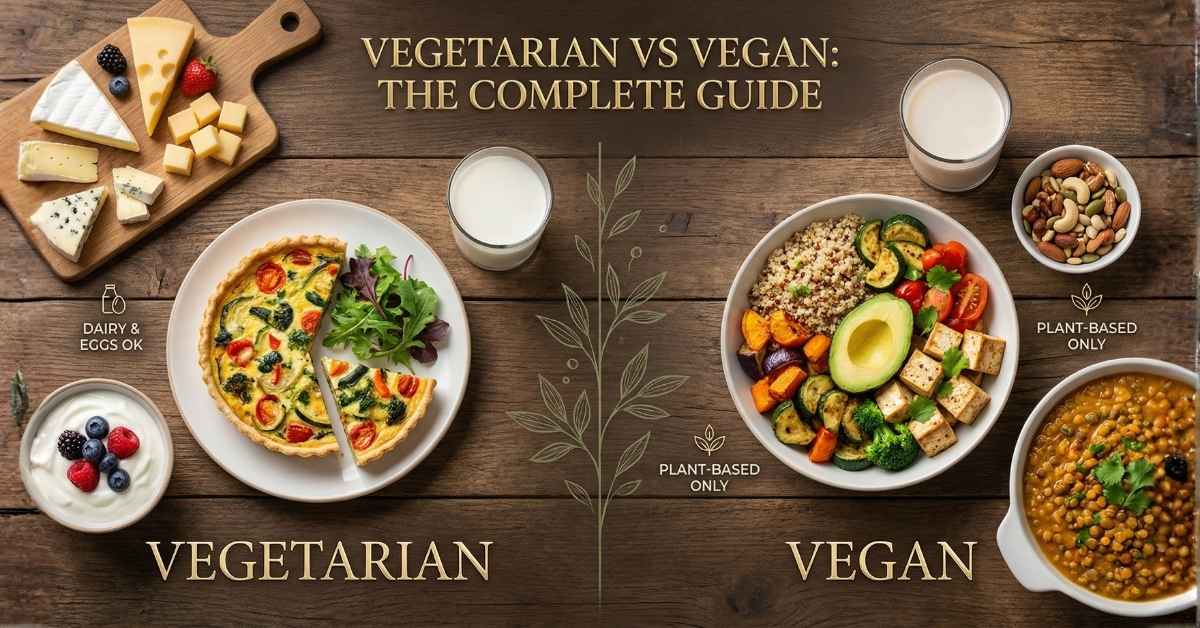
A vegetarian diet means you do not eat meat, poultry, or fish. However, most vegetarians do eat other animal products like eggs, milk, cheese, yogurt, and honey. Vegetarians focus on eating fruits, vegetables, grains, beans, nuts, and seeds as their main foods.
There are different types of vegetarians. Lacto-ovo vegetarians eat both dairy products and eggs. This is the most common type of vegetarian in America. Lacto-vegetarians eat dairy products but no eggs. Ovo-vegetarians eat eggs but no dairy products.
According to the Academy of Nutrition and Dietetics, properly planned vegetarian diets are healthy and nutritionally adequate for people of all ages.
At Istanbul Grill Restaurant, we celebrate both vegetarian and vegan lifestyles with authentic Mediterranean flavors that have delighted customers for years.
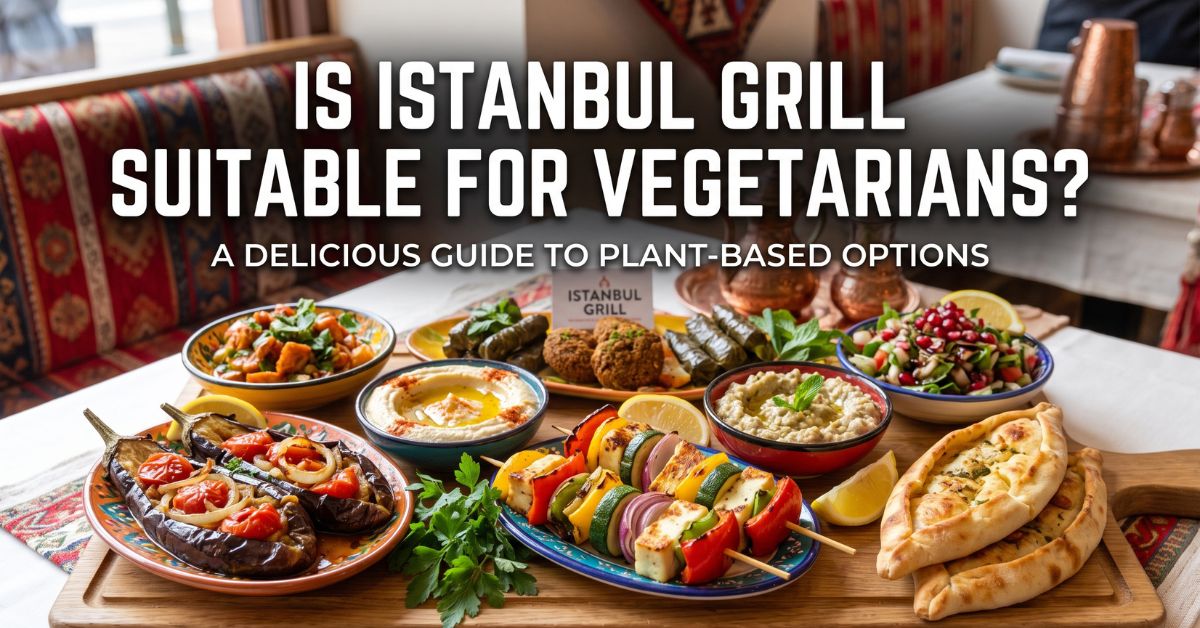
Our Popular Vegetarian Dishes Include: Meze Platter, Falafel, Hummus ,Baba Ganoush, Tabbouleh, Dolma (Stuffed Grape Leaves), Vegetarian Moussaka, Imam Bayildi, Spanakopita, Turkish Lentil Soup ,Mediterranean Salad, Grilled Vegetable Kebabs, and Fattoush Salad.
What is a Vegan Diet?
A vegan diet is stricter than a vegetarian diet. Vegans do not eat any animal products at all. This means no meat, poultry, fish, eggs, dairy products, or honey. Vegans eat only plant-based foods like fruits, vegetables, grains, beans, nuts, and seeds.
Many vegans also avoid using animal products in other parts of their lives. They might not wear leather, wool, or silk. They might choose personal care products and cosmetics that were not tested on animals. However, when people talk about “going vegan,” they usually mean changing their diet.
The vegan diet requires more planning than a vegetarian diet because you eliminate more food groups. You need to make sure you get all necessary nutrients from plant sources only.
Key Differences Between Vegetarian and Vegan
The main difference comes down to animal products. Vegetarians say no to meat but yes to other animal products like eggs and dairy. Vegans say no to all animal products without exception.
Comparison Chart: What Each Diet Includes
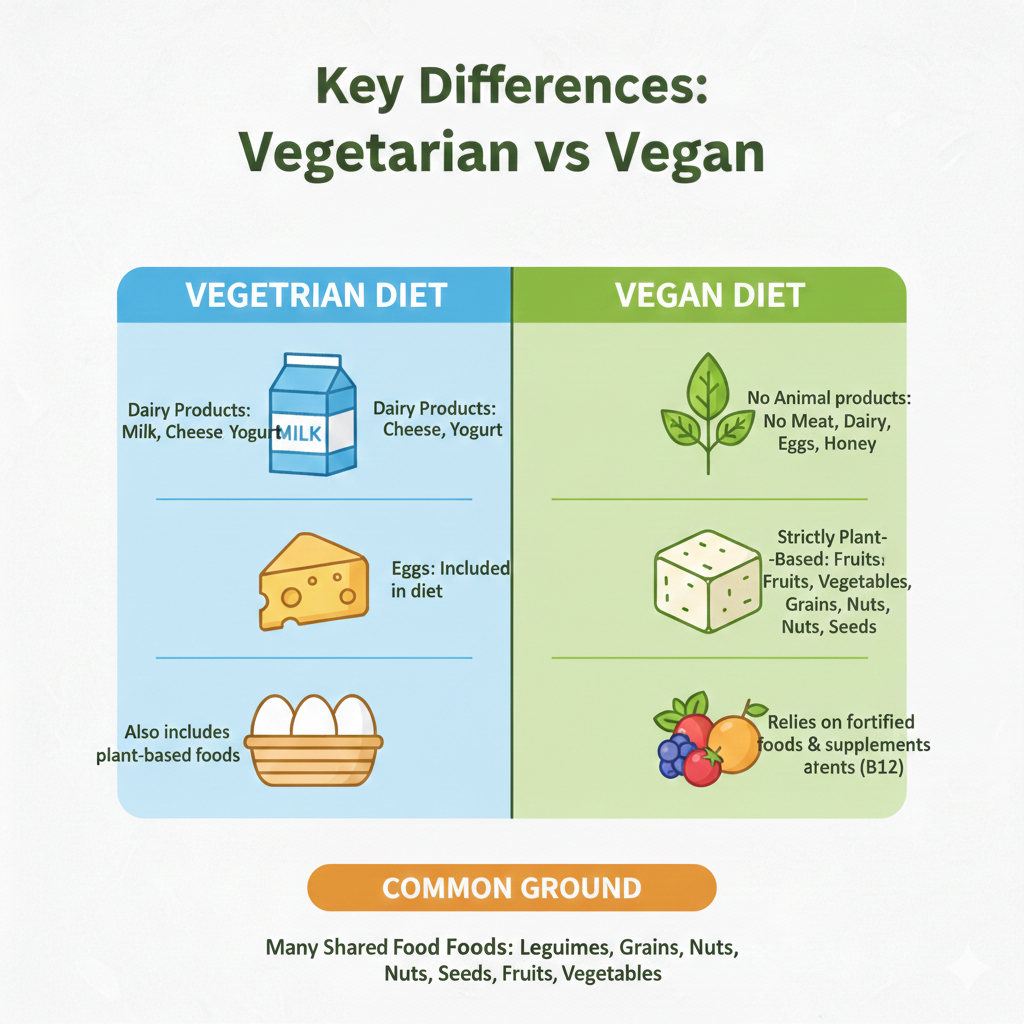
- What vegetarians eat: All plant foods plus eggs, milk, cheese, yogurt, butter, and honey.
- What vegans eat: Only plant foods. No animal products of any kind.
- Social situations: Vegetarians have an easier time eating at restaurants and family gatherings because most places offer vegetarian options with cheese or eggs. Vegans need to ask more questions and might need to bring their own food to events.
- Nutrition planning: Vegetarians can get vitamin B12, calcium, and protein easily from eggs and dairy. Vegans must plan more carefully and often need supplements, especially for vitamin B12.
- Cost: Vegetarian diets cost about the same as regular diets. Vegan diets can cost more if you buy specialty vegan products, but they cost less if you stick to basic plant foods like beans and grains.
Health Benefits of Both Diets
Both vegetarian and vegan diets offer significant health benefits compared to diets high in meat and processed foods.
Research from the AHA shows that people who follow vegetarian or vegan diets typically have lower cholesterol levels, healthier blood pressure, and lower risk of heart disease. Both diets help with weight loss and weight management because plant foods are naturally lower in calories than meat and processed foods.
Studies published by the National Institutes of Health demonstrate that both vegetarians and vegans have lower rates of type 2 diabetes compared to meat eaters. The high fiber content in plant-based diets helps control blood sugar levels.
Both diets also reduce cancer risk, especially colon cancer. Fruits and vegetables contain antioxidants and protective compounds that help prevent cell damage.
Health Benefits Comparison
Some studies suggest vegans might have slightly lower risks of certain diseases compared to vegetarians, but both diets are significantly healthier than the standard American diet high in meat and processed foods.
Nutritional Considerations
Both vegetarians and vegans need to pay attention to specific nutrients, but vegans need to be more careful
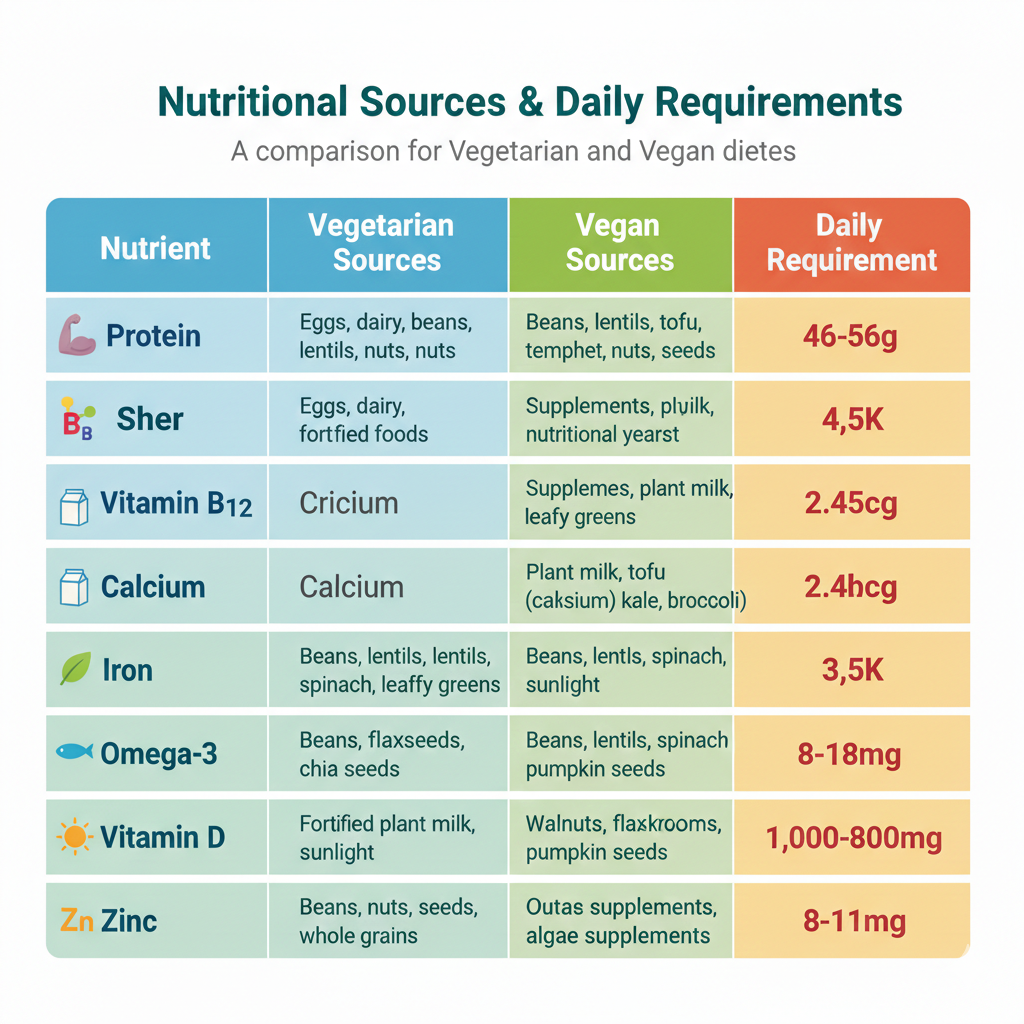
- Protein: Both vegetarians and vegans can get plenty of protein. Vegetarians get protein from eggs, dairy, beans, lentils, nuts, and whole grains. Vegans get protein from beans, lentils, tofu, tempeh, nuts, seeds, and whole grains. Both groups can easily meet protein needs with proper planning.
- Vitamin B12: This is the biggest difference. Vegetarians get B12 from eggs and dairy products. Vegans cannot get B12 from natural food sources and must take supplements or eat fortified foods like plant milk and cereals with added B12. Every vegan needs to address B12 supplementation. The Vegetarian Resource Group offers detailed guidance on B12 supplementation.
- Calcium: Vegetarians get calcium from dairy products, which makes meeting calcium needs easy. Vegans must eat fortified plant milks, tofu made with calcium, and dark green vegetables like kale and broccoli. Vegans might need calcium supplements.
- Iron: Both vegetarians and vegans get iron from beans, lentils, spinach, and fortified cereals. Plant iron absorbs better when eaten with vitamin C foods like tomatoes or citrus fruits.
- Omega-3 fatty acids: Neither vegetarians nor vegans eat fish, which is the main omega-3 source for most people. Both groups get omega-3s from walnuts, flaxseeds, and chia seeds. Vegetarians can also eat omega-3 fortified eggs.
- Vitamin D: Both groups might need vitamin D supplements, especially if they do not drink fortified milk or get regular sun exposure.
Which Diet is Easier to Follow?
For most Americans, vegetarian diets are easier to start and maintain than vegan diets. Vegetarian options appear on almost every restaurant menu. You can eat pizza, pasta with cheese, omelets, and yogurt. Social situations feel less restrictive.
Vegan diets require more commitment and planning. You need to read ingredient labels carefully because animal products hide in unexpected places. Many breads contain milk or eggs. Some wines are processed with animal products. Eating at friends’ houses or restaurants requires advance planning and questions.
However, vegan diets have become much easier in recent years. Grocery stores now stock many vegan alternatives like plant-based milk, cheese, yogurt, and meat substitutes. More restaurants offer clearly marked vegan options.
Which Diet Should You Choose?
The best diet is the one you can actually stick with long-term. Consider these factors when deciding:
Choose vegetarian if: You want an easier transition from eating meat. You enjoy eggs and dairy products. You want more flexibility when eating out. You can get necessary nutrients more easily.
Choose vegan if: You want to completely eliminate animal products. You have strong ethical concerns about all animal agriculture. You are willing to plan carefully and possibly take supplements. You enjoy cooking and trying new plant-based recipes.
Start with vegetarian: Many nutrition experts recommend starting with a vegetarian diet, especially if you currently eat a lot of meat. Once you feel comfortable eating vegetarian, you can decide whether to transition to vegan or stay vegetarian.
Final Thoughts
After serving both vegetarian and vegan customers for years, we have learned that both diets can be delicious, healthy, and satisfying. The choice between vegetarian and vegan depends on your personal health goals, values, and lifestyle.
You do not need to make a perfect choice right away. Many people start by simply eating less meat and more plants. Some become vegetarian and stay there happily. Others transition from vegetarian to vegan over time.
The important thing is moving toward more plant-based eating at whatever pace works for you. Even small changes provide health benefits and reduce your environmental impact.
Mediterranean cuisine, which we specialize in at Istanbul Grill Restaurant, makes both vegetarian and vegan eating delicious and easy. Our menu features fresh vegetables, hearty beans, whole grains, and flavorful herbs that prove plant-based food can be absolutely amazing.
Start your plant-based journey today, whether you choose vegetarian or vegan. Your body and the planet will thank you.
Is vegan healthier than vegetarian?
Both diets are healthy when properly planned. Research shows both vegetarians and vegans have lower risks of heart disease, diabetes, and cancer compared to meat eaters. Some studies suggest vegans have slightly lower disease risks, but the difference is small. The most important factor is eating plenty of whole plant foods, whether you are vegetarian or vegan.
What can vegans eat that vegetarians cannot?
This question is backwards. Vegans eat fewer foods than vegetarians, not more. Vegetarians can eat everything vegans eat, plus eggs, dairy products, and honey. Vegans eat only plant foods.
Do vegetarians and vegans get enough protein?
Yes, both groups can easily get enough protein. Vegetarians get protein from eggs, dairy, beans, lentils, nuts, and whole grains. Vegans get protein from beans, lentils, tofu, tempeh, nuts, seeds, and whole grains. The idea that you need meat for protein is a myth.
Can you be vegetarian but not vegan?
Yes, this describes most vegetarians. Vegetarian is a broader category that includes eating eggs and dairy. Vegan is more restrictive and eliminates all animal products. All vegans are vegetarians, but not all vegetarians are vegans.