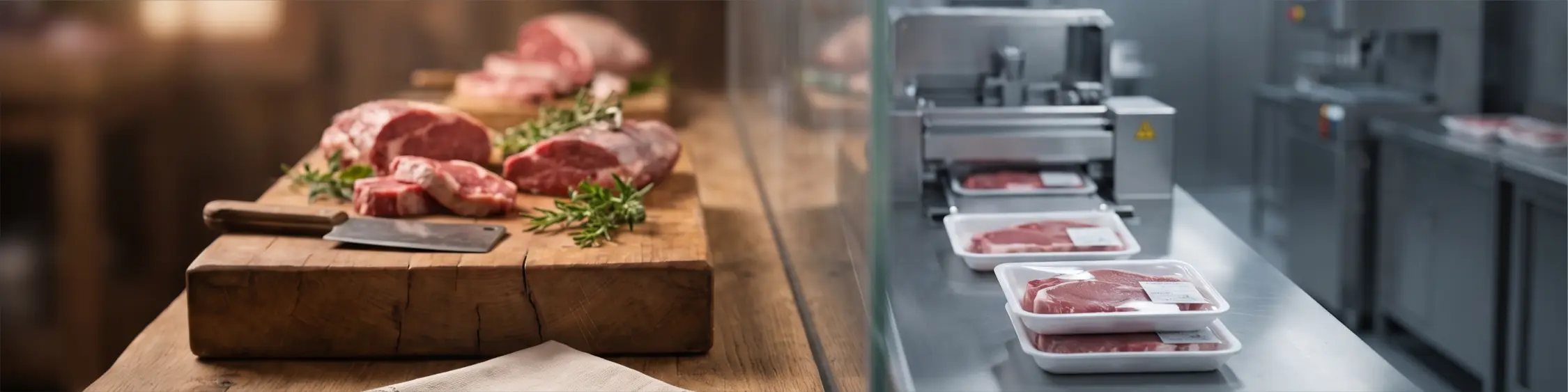
Quick answer: Halal meat comes from an animal slaughtered under Islamic law. A Muslim says a prayer, makes one quick cut to the throat, and lets the blood drain out fully. Pork is never allowed. Regular meat in the US follows USDA food safety rules only. It has no prayer, no religious rules, and pork is allowed.
At Istanbul Grill, guests ask us about this a lot. You can see our halal dishes on our full menu, and if you want to shop for halal meat yourself, read our guide on how to buy real halal meat. This post explains the difference in plain words.
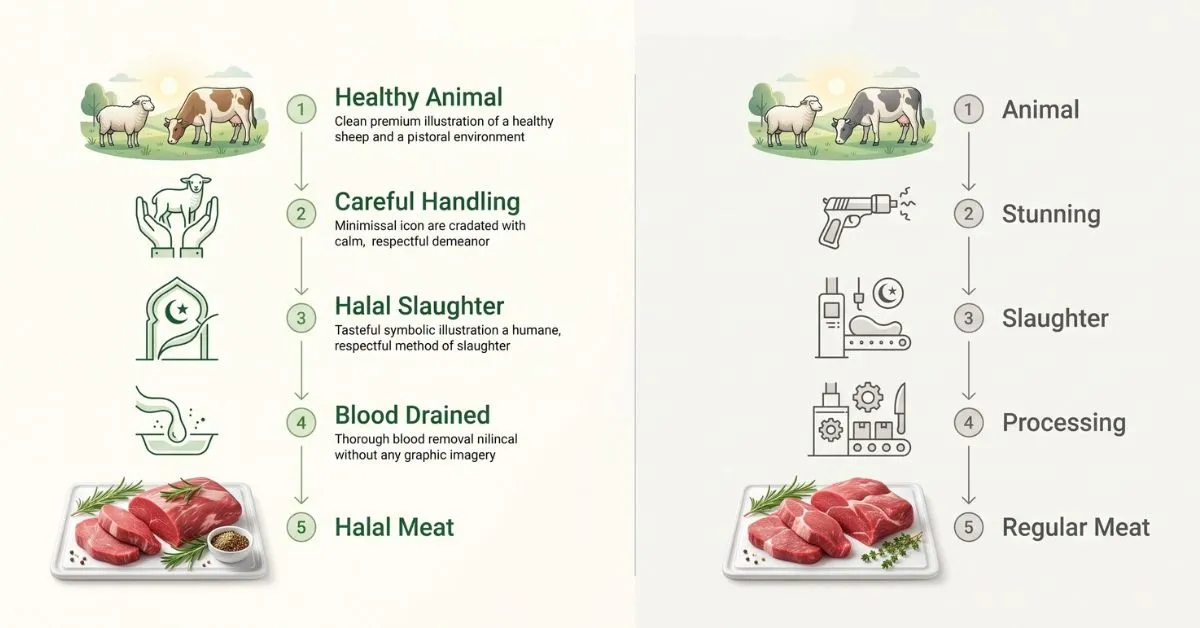
What Is Halal Meat?
“Halal” is an Arabic word. It means “allowed.” Halal meat is meat that Islamic law allows Muslims to eat. The Islamic way of slaughter is called zabiha (also spelled dhabiha).
Most halal rules say:
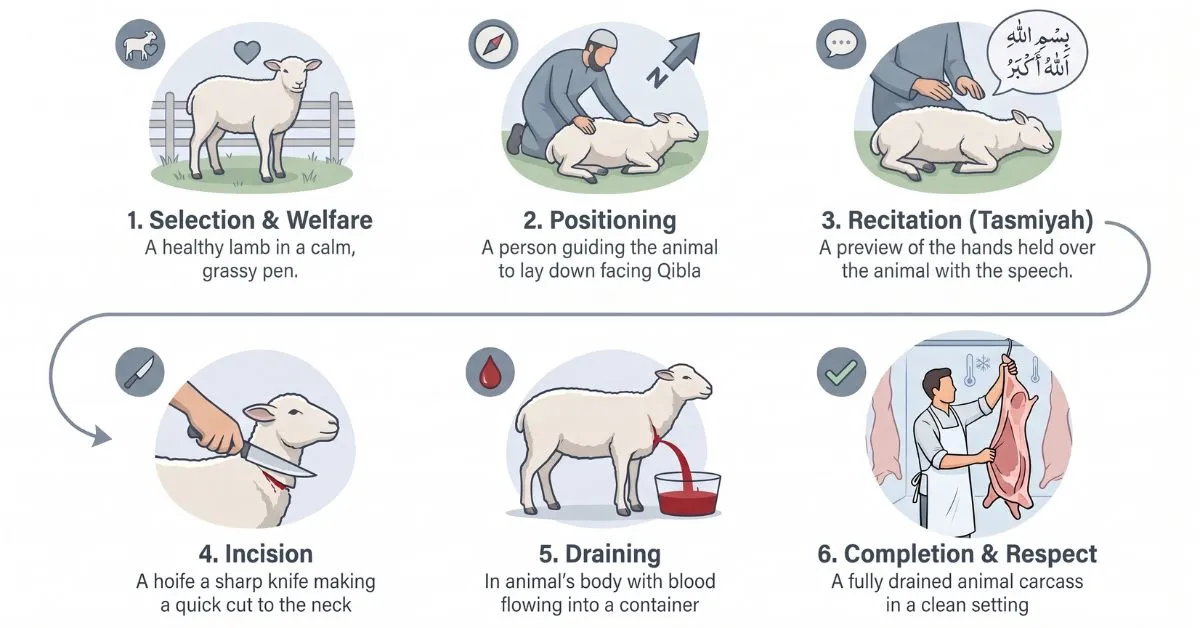
- The animal must be a halal type, such as a cow, goat, sheep, or chicken. Pork is never halal.
- The animal must be alive and healthy before slaughter.
- A Muslim says “Bismillah, Allahu Akbar” before the cut. This means “In the name of God, God is the Greatest.”
- A sharp knife makes one quick cut across the throat. The cut goes through the windpipe, the food pipe, and the main blood vessels in the neck.
- The blood must drain out fully, because Islam does not allow eating blood.
- After slaughter, the meat must be kept apart from non-halal meat.
The rules also cover how the animal is treated before slaughter. It should be fed, given water, and kept calm.
What Is Regular Meat?
Regular meat is any meat sold under normal food safety rules. In the US, the USDA inspects meat to make sure it is safe and labeled correctly. Regular meat has no religious rules. Pork is allowed.
Under a federal law called the Humane Methods of Slaughter Act, cattle, sheep, and pigs must be stunned before slaughter. Stunning makes the animal unable to feel pain before the cut. The law makes an exception for religious slaughter, such as halal and kosher. Chicken and other poultry are not covered by this law.
Halal Meat vs Regular Meat: Side-by-Side
| Point | Halal Meat | Regular Meat (USA) |
| Rules come from | Islamic law | USDA food safety law |
| Who makes the cut | A Muslim (most certifiers require this) | Any trained worker |
| Prayer before the cut | Yes | No |
| Stunning | Depends on the certifier | Required for cattle, sheep, and pigs |
| Blood | Must drain out fully | No religious rule |
| Pork | Never allowed | Allowed |
| Who checks it | USDA and a halal certifier | USDA only |
Is Stunned Meat Halal?
This is where many people get confused. Halal certifiers do not all agree on stunning.
- Some certifiers allow controlled stunning. IFANCA accepts stunning under set conditions. The rule is that the animal must still be alive when the cut is made.
- Some certifiers do not allow any stunning. The Halal Monitoring Committee (HMC) does not accept stunning in any form. Its view is that stunning can kill the animal before the cut, and an animal killed that way is not halal.
- Some certifiers also differ on machine slaughter for chicken. Some accept it. Stricter ones require hand slaughter for every bird.
So a halal label alone does not tell you if the animal was stunned. If this matters to you, ask which certifier the seller uses and look up that certifier’s rules.
Who Certifies Halal Meat in the US?
There is no single government halal agency in the US. Private groups certify halal products instead. Well-known names include:
- IFANCA (Islamic Food and Nutrition Council of America)
- HFSAA (Halal Food Standards Alliance of America), which follows a stricter hand-slaughter standard
- ISNA Halal Certification
- American Halal Foundation
Good certifiers check the slaughter, the ingredients, and how halal meat is kept apart from other meat. A package that only says “halal,” with no certifier name, gives you no proof.
Is Halal Meat Healthier?
Not in a medical sense. There is no strong proof that halal meat is healthier than regular meat. Both are safe when they are handled, stored, and cooked the right way.
Some people say halal meat tastes cleaner because more blood is drained. Others notice no difference. Freshness, the cut, and the cooking matter more for taste than the slaughter method.
Many people also choose halal for animal welfare reasons. This topic is debated. Some people see the halal method as respectful and careful. Some animal welfare groups worry about slaughter without stunning. It is fair to say both views exist.
Halal vs Kosher: Are They the Same?
No, but they are alike in some ways. Both ban pork. Both require a quick cut by a trained person. Both require the blood to be removed.
The differences:
- Kosher slaughter is done by a trained Jewish slaughterer, called a shochet. Halal slaughter is done by a Muslim.
- The prayers are different.
- Kosher meat is soaked and salted to pull out blood. Halal meat relies on the cut to drain it.
- Kosher law has extra rules, such as not mixing meat and dairy.
How Do You Know If Meat Is Halal?
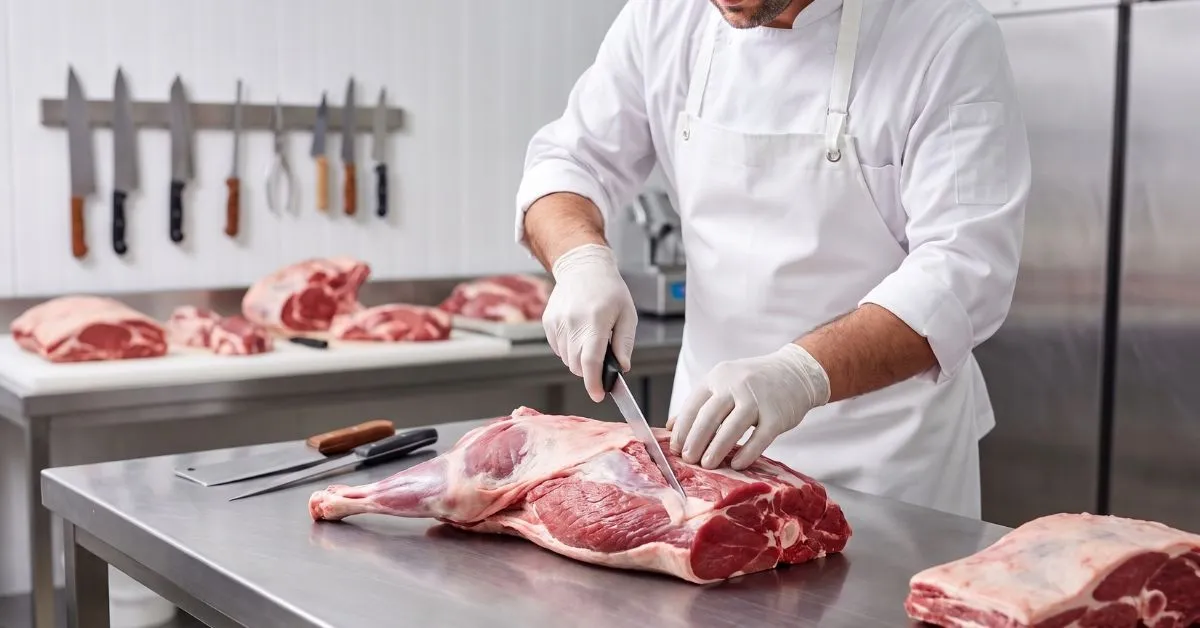
You cannot tell by looking at it, smelling it, or tasting it. You need proof:
- Look for a certifier logo on the package, not just the word “halal.”
- At a restaurant or butcher, ask where the meat comes from and who certifies it. A real halal seller will answer easily.
- Watch for hidden haram ingredients in processed foods, such as pork gelatin or alcohol-based flavoring. Our post on whether gelatin is halal or haram explains this.
- Be careful with words like “halal-style.” They do not mean the meat is certified.
Try Halal Turkish Food at Istanbul Grill
The best way to know halal Turkish food is to taste it. Start with our list of the 20 best halal dishes, then visit us in Orlando or Kissimmee. You can also order online or book a table.
Frequently Asked Questions
Can non-Muslims eat halal meat?
Yes. Halal meat is safe for everyone. Many non-Muslims eat it every day.
Is all halal meat stunned or not stunned?
It depends on the certifier. IFANCA allows controlled stunning under set rules. HMC does not allow any stunning. Ask which certifier the seller uses.
Does halal meat cost more?
Often a little more. Halal supply chains are smaller, need extra checks, and keep meat apart from other products. Prices still change by store and by cut.
Is kosher meat the same as halal meat?
No. Both ban pork and drain blood, but the person, the prayer, and the rules after slaughter are different.
Is all meat in Muslim countries halal?
Not always. Imported or processed foods can contain non-halal ingredients, so certification still matters.