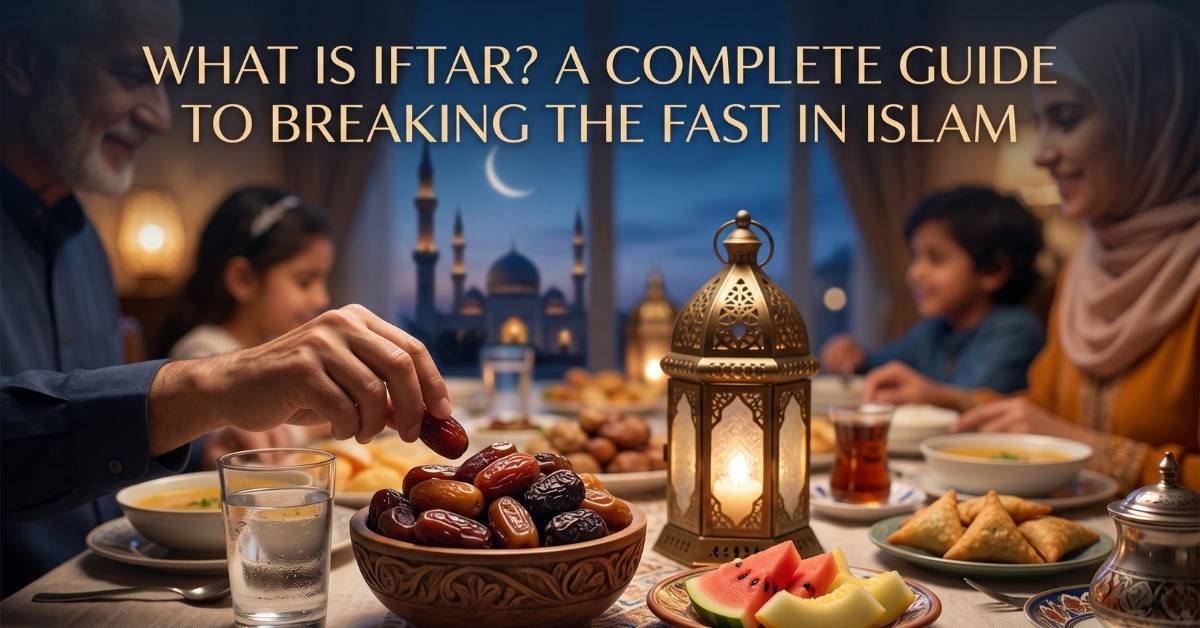
Every evening during the month of Ramadan, as the sun touches the horizon, something extraordinary happens in Muslim homes, mosques, and restaurants across America and around the world. Families gather. Tables fill with food. A prayer is whispered. And after a full day without food or water, Muslims break their fast together in a moment that is as much spiritual as it is physical.
That moment is called Iftar, and it is one of the most meaningful daily rituals in the Islamic calendar.
At Istanbul Grill Restaurant, we have served Iftar meals to Muslim families in Orlando and Kissimmee for years. We have watched the relief on people’s faces as they reach for that first date, the warmth at a table full of family, and the gratitude that fills the room. Today we are sharing everything you need to know about Iftar, what it means, how it is observed, what the Prophet taught, and what to eat.
What Does Iftar Mean?
The word Iftar comes from the Arabic root meaning “to break the fast.” It is also sometimes called futoor, which is the Arabic word for breakfast, reflecting the idea that this meal ends the day’s abstinence the way breakfast ends the night’s sleep.
Iftar is the meal eaten each evening during Ramadan, the ninth month of the Islamic lunar calendar, at the moment of sunset. During Ramadan, Muslims who are healthy and able-bodied fast from the first light of dawn until sunset each day, refraining from all food, drink, and other specific activities. Iftar marks the end of each day’s fast and the beginning of the evening.
Ramadan 2026 ran from approximately February 18 to March 19, shifting about ten days earlier each year in line with the Islamic lunar calendar rather than the Gregorian solar calendar. This means Iftar falls at a different local time each day throughout Ramadan, moving earlier or later as sunset shifts with the seasons.
The Spiritual Meaning of Iftar
Iftar is far more than simply eating after a long day without food. Understanding its spiritual dimension is essential to understanding why it matters so deeply to Muslims.
Fasting during Ramadan is one of the Five Pillars of Islam, the core practices that every Muslim is obligated to observe. The Quran commands it in Surah Al-Baqarah (2:183):
“O you who believe! Fasting is prescribed for you as it was prescribed for those before you, that you may develop God-consciousness.”
The purpose of this fasting is not suffering but purification. A day of fasting is meant to build self-discipline, cultivate empathy for those who go hungry through necessity rather than choice, deepen gratitude for the blessings of food and water, and draw the believer closer to Allah through heightened spiritual awareness.
Iftar, then, is not just relief from hunger. It is gratitude made physical. The Prophet Muhammad (peace be upon him) said:
“The fasting person has two moments of joy: one when he breaks his fast and one when he meets his Lord.” (Sahih al-Bukhari)
This is why Iftar gatherings feel different from ordinary meals. There is a quality of thankfulness and togetherness that is hard to replicate outside of Ramadan.
When Exactly is Iftar?
Iftar occurs at the precise moment of sunset, which Islamic tradition identifies with the Maghrib prayer time. This is not an approximate time. It is a specific moment tied to the disappearance of the sun below the horizon.
In the USA, mosques and Islamic centers publish daily Ramadan prayer schedules that list the exact Iftar time for each day. These times vary by geographic location and by date throughout Ramadan. A family in Orlando will have a different Iftar time than a family in New York, and the Iftar time in the first week of Ramadan will differ from the Iftar time in the last week.
The wisdom of not delaying Iftar is specifically emphasized in the Prophetic tradition. The Prophet Muhammad (peace be upon him) said:
“The people will remain in good condition as long as they hasten to break the fast.” (Sahih al-Bukhari)
This means that as soon as sunset arrives, Muslims should break their fast without delay, not waiting for a more convenient moment or a larger gathering.
The Prophetic Method of Breaking the Fast
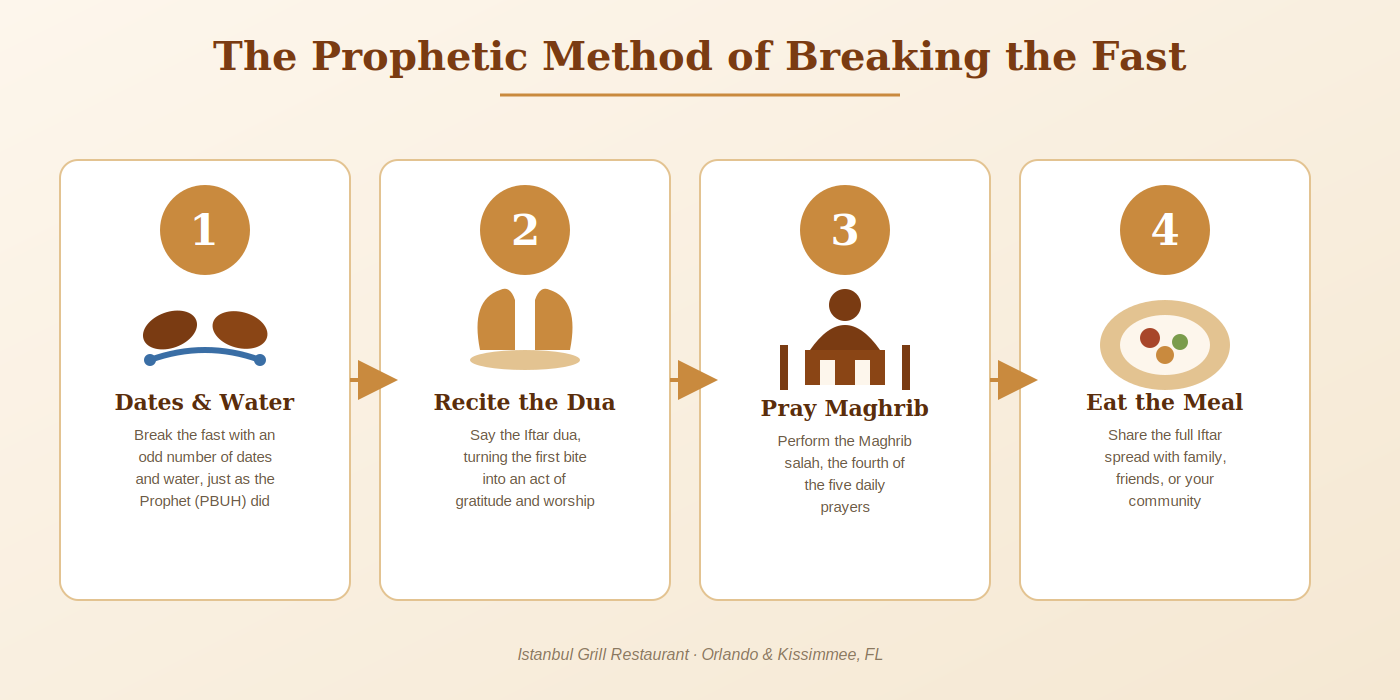
The Prophet Muhammad (peace be upon him) established a specific tradition for how the fast should be broken, and Muslims around the world follow this practice today.
Step 1: Break the Fast with Dates and Water
Before anything else, the fast is broken with an odd number of dates, traditionally three, and water or milk. This was the specific practice of the Prophet. The nutritional wisdom behind this practice is remarkable. After a day of fasting, the body needs immediate glucose to begin functioning optimally. Dates contain natural sugars including fructose and glucose that provide an instant energy boost. They are also rich in fibre and high in potassium and magnesium which help the body rehydrate and restore electrolyte balance.
Step 2: Recite the Dua for Breaking the Fast
Before or after the first date, Muslims say the Iftar dua:
“Allahumma inni laka sumtu wa bika aamantu wa alayka tawakkaltu wa ala rizqika aftartu.”
(O Allah, I fasted for You, I believed in You, I put my trust in You, and I break my fast with Your sustenance.)
This prayer transforms the act of eating into an act of worship. It acknowledges that the ability to fast and the food to break the fast are both gifts from Allah.
Step 3: Pray Maghrib Salah
After breaking the fast with dates and water, Muslims perform the Maghrib prayer, the fourth of the five daily prayers. The full Iftar meal follows after this prayer.
Step 4: Eat the Iftar Meal
The full meal is eaten after Maghrib prayer, typically with family, friends, or at a communal gathering at a mosque or restaurant.
What to Eat at Iftar: The Best Foods to Break Your Fast
The foods served at Iftar vary by culture and country, reflecting the incredible diversity of the Muslim world. However, certain principles guide a healthy and traditional Iftar regardless of cultural background.
Start with Soup
A warm soup prepares the stomach for the main meal after a long period of fasting. Turkish lentil soup, which we serve at Istanbul Grill Restaurant, is a traditional and ideal choice. It is gentle on a fasting stomach, provides protein and fibre, and warms the body slowly before heavier food is introduced. Understanding the basic concept of halal food explains why halal preparation matters for every dish at your Iftar table.
Include Lean Protein
After hours of fasting, your body needs quality protein to rebuild and restore. Grilled lamb, chicken kebabs, and kofta are traditional Iftar proteins across Turkish and Middle Eastern culture. At Istanbul Grill, our halal-certified grilled meats are among the most popular Iftar dishes we serve. All our meat follows halal standards explained in our guide on is beef halal.
Add Complex Carbohydrates
Rice pilaf, flatbread, and bulgur wheat provide the sustained energy that simple sugars cannot. After breaking the fast with the immediate glucose from dates, complex carbohydrates ensure energy levels remain stable through the evening.
Include Fresh Salad
A chopped salad of tomatoes, cucumbers, parsley, and olive oil provides vitamins and hydration. In Turkish tradition, this type of fresh salad is served at virtually every meal including Iftar.
Hydrate Throughout
Drink water consistently between Iftar and the next morning’s suhoor meal. Avoid excessive sugary drinks and caffeinated beverages during the evening as these can contribute to dehydration during the next day’s fast.
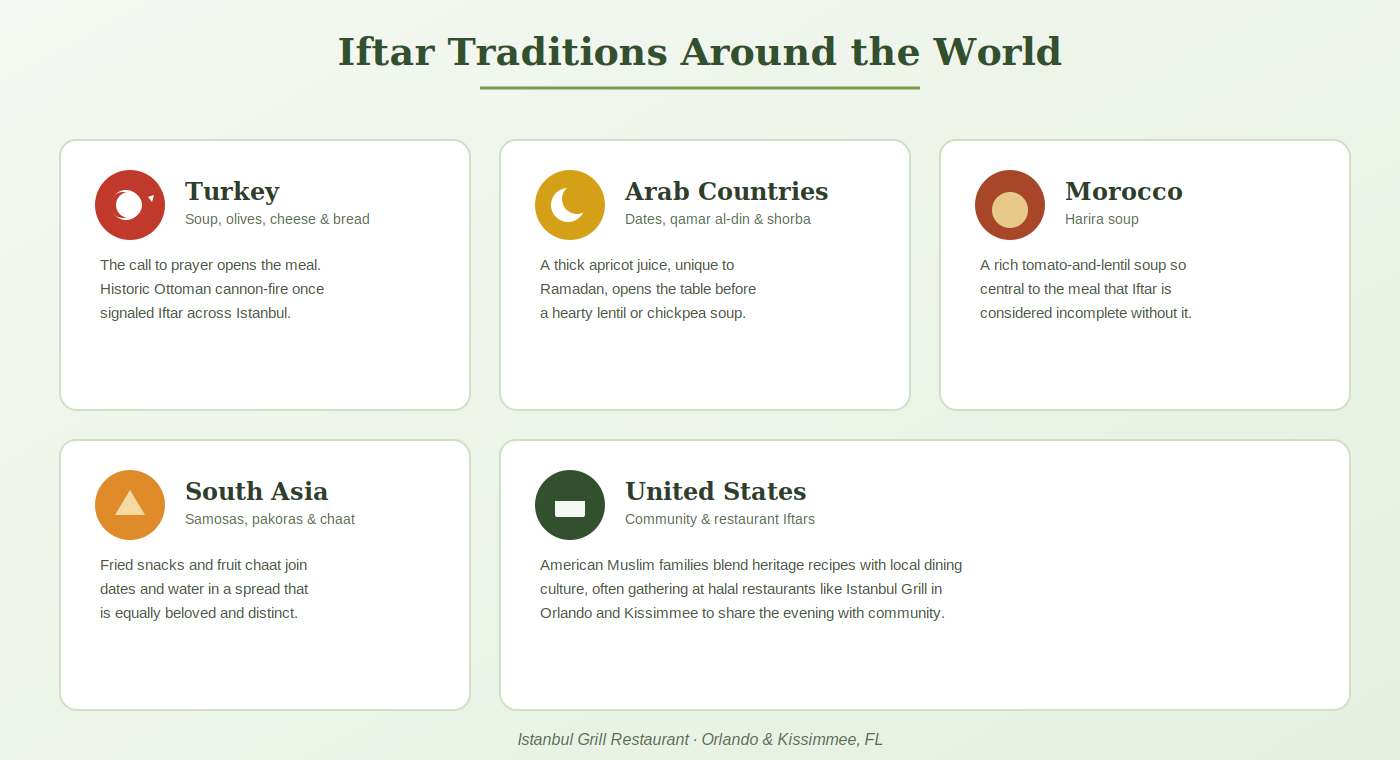
Iftar Traditions Around the World
Turkey
Iftar begins with the call to prayer from the mosque. Tables are set with soup, olives, white cheese, fresh bread, and dates. The Ottoman tradition of a cannon being fired to signal Iftar time is still observed in Istanbul during Ramadan. After Iftar, families often drink Turkish tea together before Tarawih prayers.
Arab Countries
Iftar typically opens with dates, water, and a glass of qamar al-din, a thick apricot juice specifically associated with Ramadan in the Levant region. This is followed by shorba, a hearty lentil or chickpea soup, before the full meal of grilled meats, rice, and salads.
Morocco
The fast is broken with harira, a hearty tomato and lentil soup so closely associated with Ramadan that many Moroccan families consider it unthinkable to begin Iftar without it.
South Asia
Iftar spreads feature samosas, pakoras, chaat, and fruit salads alongside dates and water, reflecting a distinct but equally beloved tradition.
United States
Muslim families often blend their cultural heritage with American dining culture. Many American Muslim families choose to break their fast at halal restaurants where they can share the experience with community members. All our food meets the basic concept of halal food standards.
Iftar as a Community Experience
In Islam, Iftar is not only a private family meal. It is an act of community and generosity.
The Prophet Muhammad (peace be upon him) said:
“Whoever feeds a fasting person will have a reward like that of the fasting person, without any decrease in his reward.” (Tirmidhi)
This hadith has made feeding others at Iftar one of the most beloved charitable acts during Ramadan. Mosques across America host community Iftar dinners throughout Ramadan, opening their doors to Muslims and non-Muslims alike. Universities host interfaith Iftar events. Organizations and companies increasingly sponsor Iftar dinners to honour Muslim employees and build inclusivity.
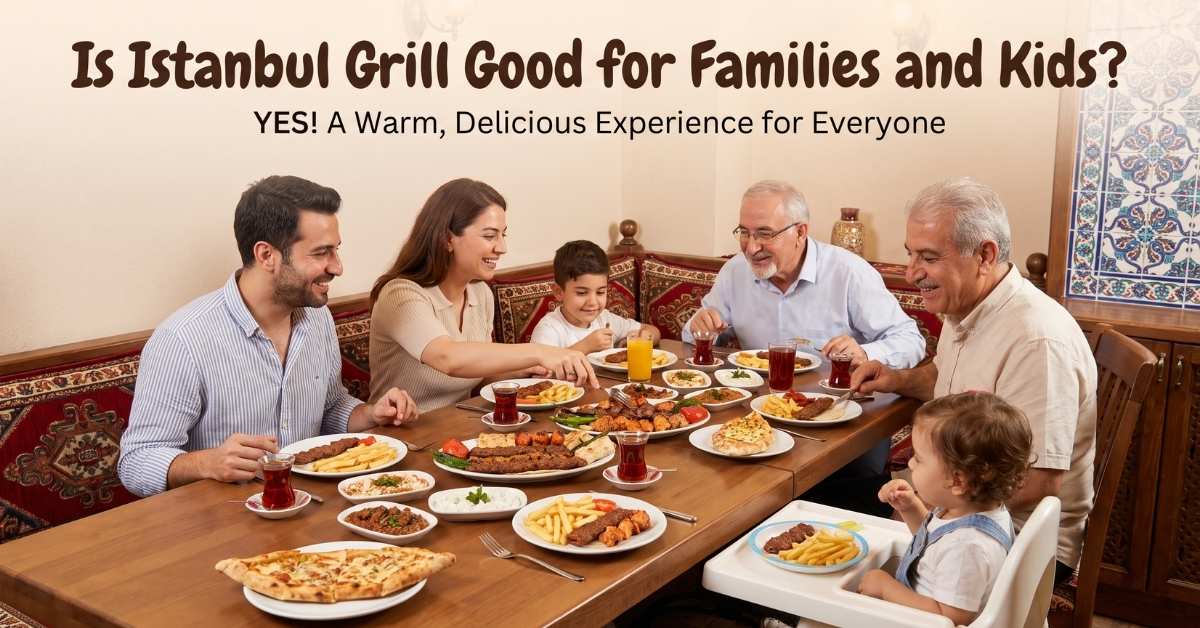
At Istanbul Grill Restaurant, we welcome Ramadan as a time to serve our Muslim community in Orlando and Kissimmee with authentic halal food prepared with the care and standards that Iftar deserves. Our full menu is available throughout Ramadan.
Iftar vs Suhoor: What is the Difference?
Many people confuse Iftar with Suhoor. Here is a clear comparison.
- Iftar is the meal eaten at sunset to break the fast at the end of the day. It is connected to Maghrib prayer and should be eaten immediately at sunset. It begins gently with dates and water before moving to a fuller meal.
- Suhoor is the pre-dawn meal eaten before the fast begins each morning. It is connected to Fajr prayer and should be delayed as close to the Fajr adhan as possible. It should focus on sustained energy foods like oats, eggs, whole grains, and fruit that will carry you through the coming day’s fast.
Read our guide on what are the haram foods in Islam to understand what to avoid at both Iftar and Suhoor meals, and our complete breakdown of the difference between halal meat and regular meat if you want to understand what makes the meat on your Iftar table truly permissible.
Iftar Etiquette: What Every Guest Should Know
If you are attending an Iftar dinner as a non-Muslim guest, these simple courtesies will help you participate respectfully and meaningfully.
- Arrive on time. The meal cannot begin until the sun sets, so timing matters. If you arrive late and the fast has already been broken, join gracefully without drawing attention.
- Wait for the host to break their fast first. When the Maghrib adhan sounds or when the host announces the fast is broken, follow their lead. The host will typically reach for dates and water before anything else.
- Do not be offended if conversation pauses for prayer. After the initial fast-breaking with dates, many Muslims will pray Maghrib before the full meal. This brief pause of ten to fifteen minutes is a completely normal part of the Iftar experience.
- Expect generous hospitality. Iftar tables are typically abundant. Accepting food and expressing gratitude is the most appropriate response.
Visit Istanbul Grill Restaurant for Authentic Halal Iftar
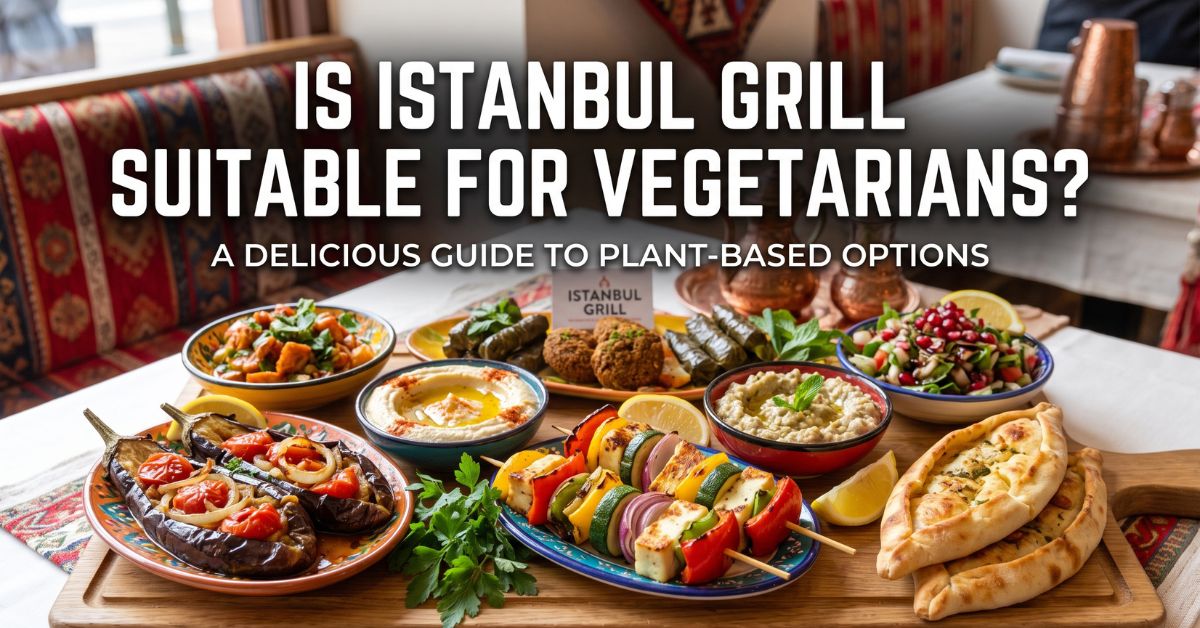
At Istanbul Grill Restaurant, we are honoured to serve authentic Turkish halal food worthy of your Iftar table. From our warming lentil soup to our halal grilled kebabs, our rice pilaf and fresh salads, every dish is prepared with the care and certification that Ramadan deserves.
Open 7 days a week Mon – Sat: 12:00 PM – 10:00 PM Sun: 2:00 PM – 10:00 PM
- Orlando: 9428 South Orange Blossom Trail, Orlando FL 32837 | 407-286-0887
- Kissimmee: 2901 Parkway Blvd, Kissimmee FL 34747 | 407-507-0100