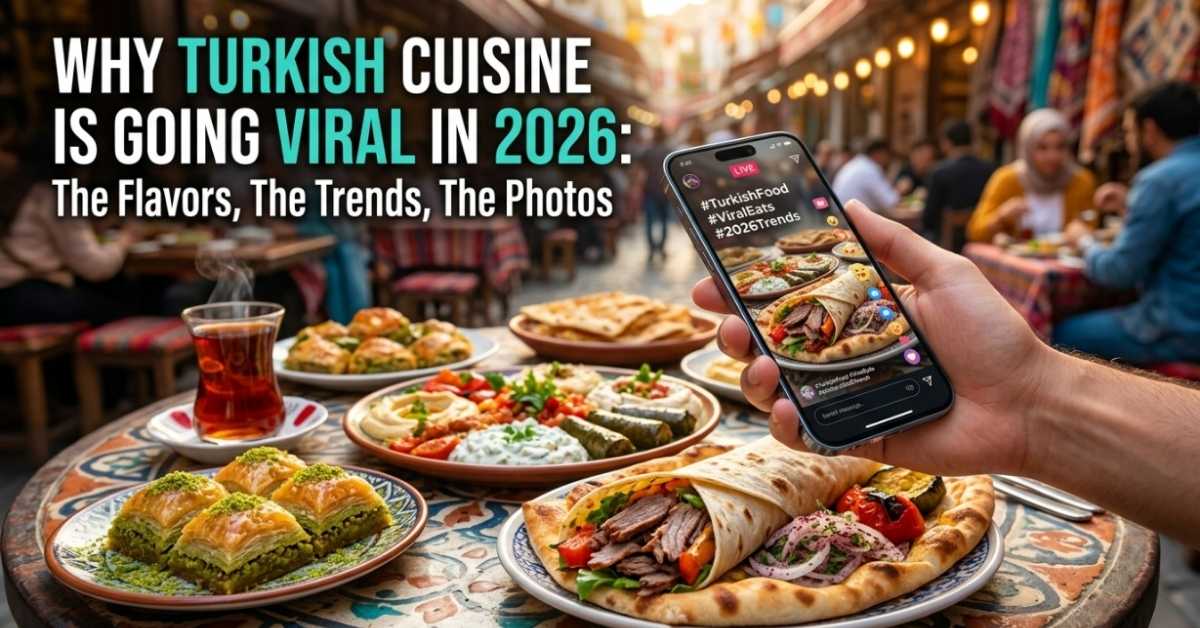
TurIf you have opened TikTok or Instagram lately, there is a good chance you have seen someone twirling a giant block of meat on a vertical spit, stretching a glossy rope of kunefe cheese, or pouring molten metal sugar over a pan of baklava. That sizzle, that stretch, that shower of pistachios, this is Turkish food, and right now it is one of the most visible cuisines on the internet.
At Istanbul Grill Restaurant, we have watched this happen in real time. Customers come in holding their phones, asking if we make “that dish from the video,” and more often than not, we already do. Today, we are breaking down exactly why Turkish cuisine has become such a massive social media moment in 2026, and what it means for anyone curious enough to try it for themselves.
Turkish Cuisine is Officially One of the Most Visible Cuisines Online
At the start of 2026, the food media outlet Chef’s Pencil analyzed hashtag volume across Instagram, TikTok, and Facebook to rank the most visible international cuisines in the world. According to their findings, Turkish cuisine ranked 13th globally, outperforming several European food traditions that have historically carried far greater fine-dining prestige.
That is a remarkable result. Turkish food is going head to head online with cuisines that have entire television networks and decades of marketing behind them, and it is winning.
Even more interesting is who Turkish food is keeping company with on that list. Chef’s Pencil specifically noted that Filipino, Indonesian, Nigerian, Vietnamese, Greek, and Turkish cuisines all outperform what a simple Instagram-only ranking would suggest. In other words, Turkish food is not just popular, it is part of a broader wave of community-driven, diaspora-fueled cuisines that are quietly overtaking the old guard of food media.
So Why Turkish Food Specifically?
There are a few clear reasons this is happening right now, and they all come down to how Turkish food actually behaves on camera.
It Was Built for Video Before Video Even Existed
Chef’s Pencil’s report makes a point that perfectly explains the Turkish food moment: Turkish cuisine draws on a layered culinary landscape of street food, home cooking, and highly regionalized traditions, with dishes and techniques that lend themselves naturally to video-first and community-driven platforms.
Think about what that actually means in practice. A döner kebab spit rotating slowly in front of an open flame is, by definition, already a moving picture. Someone hand-pulling dondurma (Turkish ice cream) on a long metal paddle is performance art. A sheet of kunefe getting drowned in syrup and torn open to reveal stretchy cheese inside is the kind of thing that stops a thumb mid-scroll. Turkish cooking has always involved movement, fire, and theater. TikTok did not create that, it just finally gave it the stage it always deserved.
Real Turkish Creators Are Driving the Trend, Not Outsiders
A huge part of this moment is coming directly from Turkey itself. According to influencer tracking platform HypeAuditor, Turkish chef Burak Özdemir (@cznburak) is currently the second most popular food and cooking creator on all of Instagram, with 51.4 million followers, trailing only one other creator worldwide. His theatrical, larger-than-life cooking videos, often built around classic Turkish dishes, have introduced millions of people around the world to Turkish food culture without those viewers ever needing to read a single word of explanation.
This matters because it means Turkish cuisine is not being filtered through outside interpretation. It is being shown to the world by Turkish cooks themselves, on their own terms, which tends to produce far more authentic and shareable content than a foreign food blogger’s take on the same dish.
Comfort Food is Winning in 2026
Industry trend reports for 2026 point to a broader shift toward whole foods, whole ingredients, and traditional Levantine, Kurdish, and Turkish cuisines, specifically naming dishes like lahmacun and shawarma as part of this movement. After several years of hyper-processed, novelty-driven food trends, audiences online are gravitating back toward food that feels real, generous, and rooted in actual tradition.
Turkish food fits that mood perfectly. As one food ranking publication put it bluntly in its 2026 cuisine roundup, Turkish food is “the bridge between worlds,” where kebabs, breads, stews, and meze dominate, and they dominate for a reason, because Turkish food is generous, filling, and endlessly reliable. That kind of unpretentious, deeply satisfying cooking is exactly what social media audiences are craving right now after years of trend-chasing.
The Specific Dishes Fueling the Trend
A handful of Turkish dishes keep showing up again and again across viral food content. If you have seen Turkish food on your feed recently, it was probably one of these.
- Döner Kebab – The original rotating spit dish, and the direct ancestor of shawarma and gyro. The visual of thin, glistening slices being shaved off a vertical spit is one of the most replayed food clips on the internet.
- Lahmacun – Often nicknamed “Turkish pizza,” this thin, crispy flatbread topped with spiced minced meat is rolled up and eaten by hand, making it a perfect bite-sized video moment.
- Kunefe – A dessert made of shredded pastry, melted cheese, and sweet syrup. The cheese-pull moment when it is cut open is one of the single most viral food visuals in the world right now.
- Çılbır (Turkish Eggs) – Poached eggs over garlicky yogurt, finished with sizzling red pepper butter. We covered this dish in detail in our guide on what is çılbır, and it remains one of the most shared Turkish breakfast dishes online.
- Dondurma – Turkish stretchy ice cream, famous for the playful way vendors tease and stretch it before handing it over, a trick that has been delighting phone cameras for years.
- Baklava – Layers of paper-thin phyllo, chopped pistachios, and sweet syrup. The slicing and stacking process alone generates enormous engagement.
What Makes Turkish Food Different From Other Viral Cuisines
A lot of trending food content is built around novelty, something strange-looking or extreme that gets attention once and then fades. Turkish food is succeeding for the opposite reason. It is built on dishes with real depth, history, and reasons to come back to again and again.
This is reflected in just how wide the cuisine actually is. Turkish food culture is significant enough that an Anatolian rock star, Barış Manço, wrote an entire hit song called “Domates Biber Patlıcan,” which translates to “Tomatoes, pepper, eggplant.” That is a cuisine with a cultural footprint that goes far beyond a single viral clip.
The diversity also helps. Turkish cuisine spans grilled meats and kebabs, slow-cooked stews, stuffed vegetables called dolma, shareable meze spreads, fresh-baked breads, and an entire universe of syrup-soaked desserts. Meze dishes alone typically include items like cacik (a herby yogurt dip), hummus, and ezme (a chopped vegetable salad of fresh tomatoes and peppers), sometimes alongside meat or fresh fish. There is enough variety here to fuel content for years without repeating the same dish twice, which is exactly why the trend has had staying power rather than fading after a few weeks.
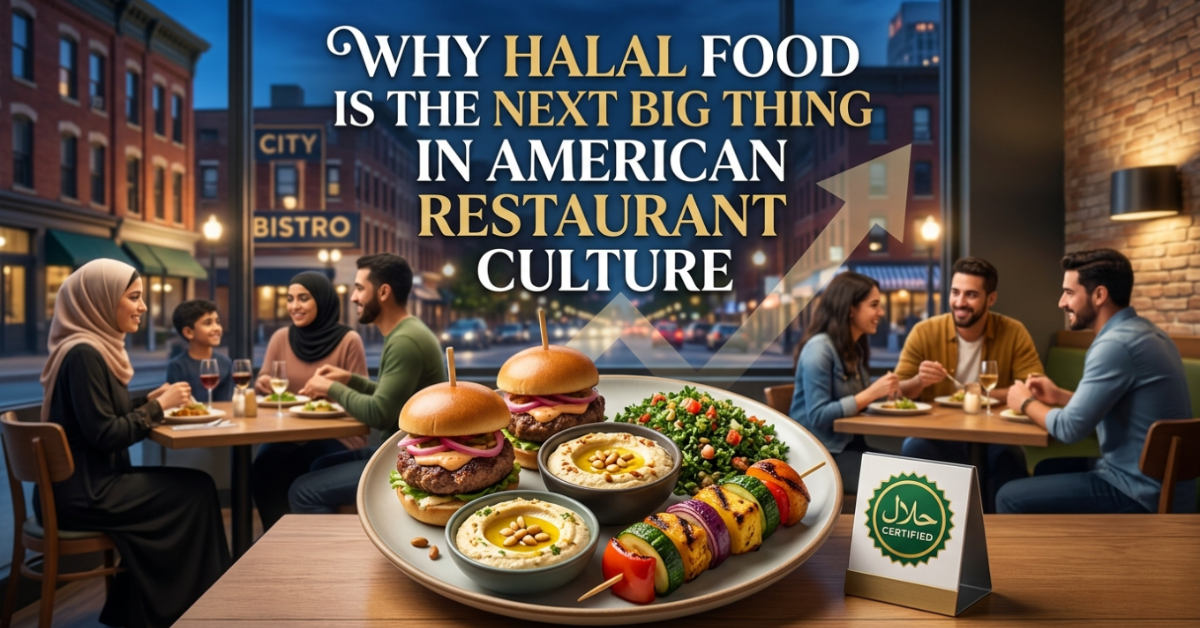
Halal Demand is Rising Alongside the Trend
There is another piece of this story that does not get talked about enough. As global interest in Turkish food grows, so does global interest in halal dining specifically. The halal food industry is worth more than 912 billion dollars worldwide, with Turkish consumers alone accounting for 28 billion dollars of that total, and more people are taking their religious dietary practices seriously than in previous years.
That growing demand is not staying overseas. It is showing up directly in how American diners search for and choose restaurants, and it is part of why Turkish restaurants that are properly halal-certified, like Istanbul Grill, are seeing so much new interest. If you want to understand exactly what halal certification involves, we cover it fully in our guide on the basic concept of halal food.
What This Means If You Have Never Tried Turkish Food
If your only exposure to Turkish cuisine so far has been a fifteen-second video, you are missing almost everything that makes it special. Watching a döner spit rotate is not the same as tasting meat that has been marinated for 24 hours in a dozen spices. Seeing kunefe stretch on screen is not the same as tasting warm syrup and salty cheese together for the first time.
At Istanbul Grill Restaurant, this is exactly the gap we love filling for our customers. Someone walks in having seen a Turkish dish online, not entirely sure what to expect, and walks out as a genuine fan of the cuisine. If you are curious where to start, our guide on the ultimate history, types, and traditions of Turkish kebab is a great place to begin, and our Turkish food menu shows you everything we serve, from the dishes you have already seen online to the ones you have not discovered yet.
Taste the Trend at Istanbul Grill Restaurant
Turkish cuisine did not suddenly become good in 2026. It has been this good for centuries. What changed is that the rest of the world finally has a camera pointed at it. At Istanbul Grill Restaurant, we are proud to bring the real version of everything you have been seeing online, made fresh, made halal, and made the way it has always been made in Turkey.
Visit our Turkish food menu and come taste what millions of people are currently watching on their phones. We promise it is even better in person.