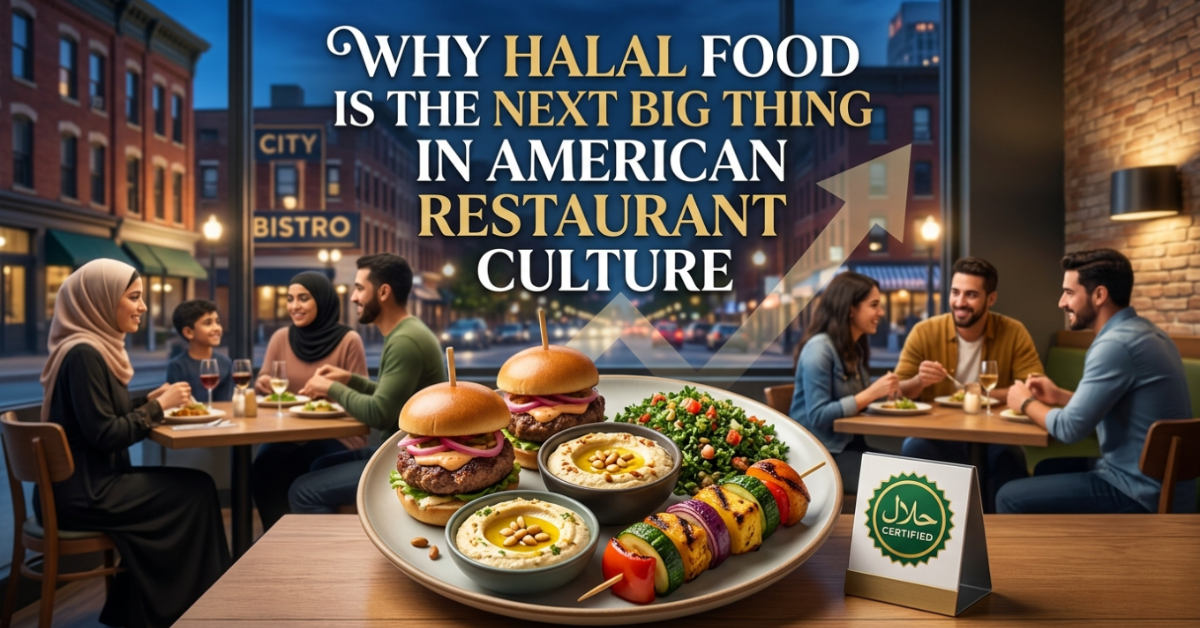
Something big is happening in the American restaurant industry right now, and most people have not noticed it yet. Halal food, once considered a niche category served only in specialized ethnic markets and community restaurants, has crossed into the mainstream. It is showing up in fast casual chains, major supermarkets, college campuses, sports stadiums, and fine dining establishments across the country.
At Istanbul Grill Restaurant, we have been serving certified halal food in Orlando and Kissimmee for years. We watched this shift coming long before it made headlines, and we are proud to be part of it. Today we are breaking down exactly why halal food is the next big thing in American restaurant culture, with real 2026 market data to back it up.
The Numbers Are Undeniable
Before anything else, look at what the market data actually shows.
According to IMARC Group’s 2026 United States Halal Food Market report, the US halal food market was valued at USD 733.6 billion in 2025 and is projected to reach USD 1,621.7 billion by 2034, growing at a compound annual growth rate of 8.94% from 2026 to 2034.
According to the North America Halal Food Market report published by ResearchAndMarkets in 2025, the North American halal food market is projected to surge from USD 100 billion in 2024 to USD 226 billion by 2033, growing at 9.47% annually.
According to GlobeNewswire’s April 2026 halal food market report, quick-service restaurants and dining establishments across the United States are actively increasing halal-certified options to meet rising consumer demand, and mainstream retail outlets like Walmart and Costco are expanding accessibility to halal products.
These are not small numbers. This is one of the fastest-growing segments of the entire American food industry, and it is accelerating.
From Niche to Mainstream: How This Happened
Halal food did not suddenly become popular in 2026. The shift has been building for years, driven by several forces that all arrived at the same time.
The Muslim Population is Growing Fast
With approximately 3.5 million Muslims living in the United States today, Muslim Americans are one of the fastest-growing demographic groups in the country. The US is expected to have 8.1 million Muslims by 2050, according to GlobeNewswire’s 2026 market analysis. This growing population creates a permanent, growing base of consumers who require halal food every single day, not just occasionally.
When a demographic group grows this fast, the food industry follows. Restaurants, grocery chains, and food manufacturers all respond to where the demand is going, and right now it is going toward halal.
Non-Muslim Consumers Are Choosing Halal Too
This is the part of the story that surprises most people. A significant percentage of halal food consumers in the United States are not Muslim at all.
According to the GlobeNewswire 2026 halal market report, non-Muslim consumers in the United States are drawn to halal products due to perceptions of superior quality, ethical sourcing, and hygienic production. This is particularly popular among Millennials and Gen Z, who seek alignment with ethical and sustainable food practices.
As we explored in detail in our guide on halal food for non-Muslims, around 35% of non-Muslim consumers in the United States either prefer or actively purchase halal products. This transforms halal from a religious category into a mainstream quality signal, much like organic or grass-fed labels.
The Gen Z and Millennial Effect
Gen Z and Millennials are the most values-driven consumer generations in American history. They research where their food comes from, they care about animal welfare, they prioritize supply chain transparency, and they are more culturally curious than any previous generation.
Halal food aligns perfectly with all of these values. The halal certification process requires independent verification, ethical animal treatment, clean ingredient standards, and transparent sourcing. For younger consumers who are already paying premium prices for organic, grass-fed, and ethically sourced food, halal certification provides another layer of meaningful assurance.
According to Malou’s June 2026 hospitality industry report, “In London, it’s on the window next to gluten-free and vegan-friendly. In the U.S., it’s fast becoming mainstream — and the brands that win will treat halal not as an exception but as a standard attribute.”
What is Changing in American Restaurants Right Now
The shift toward halal is visible across every segment of the American restaurant industry in 2026.
Fast Casual is Leading the Way
According to HilalInfoHub’s 2026 US halal food market analysis, halal versions of fast food are becoming widely popular, offering quick, affordable meals without compromising quality. Halal fast-casual chains are expanding rapidly in cities with significant Muslim populations, and major mainstream chains are testing halal-certified menu items in markets where demand is strongest.
The fast-casual format is perfectly suited to halal food. The emphasis on fresh ingredients, transparent sourcing, and customizable meals aligns naturally with halal principles of quality and cleanliness.
Campus Dining is Going Halal
University campuses across America are adding halal stations and dedicated halal menus to their dining halls. This is a direct response to the growing Muslim student population and to non-Muslim students who request more ethical food options.
Campus dining contracts are among the most influential in the food industry because they introduce thousands of young people to a cuisine or food category during their most formative consumer years. The students who eat halal food at their university cafeteria become the restaurant customers who seek it out for the rest of their lives.
Mainstream Retail is Expanding Halal Shelf Space
Large retailers expanded halal product shelf space by more than 15% between 2021 and 2024, according to Straits Research. Walmart, Costco, Whole Foods, and Kroger are all increasing their halal product offerings in response to consumer demand.
When the largest retailers in America start dedicating more shelf space to a category, it signals that the category has crossed from specialty to mainstream. This retail expansion also makes halal food more visible to non-Muslim consumers who would not previously have encountered it.
Digital Platforms Are Amplifying Discovery
According to Malou’s 2026 halal restaurant market analysis, social discovery and “Is [Brand] halal?” queries are swelling in brand search logs. More consumers are actively researching the halal status of restaurants and food brands before visiting or purchasing.
This digital due diligence reflects a more sophisticated consumer base that takes food standards seriously. Restaurants that can clearly demonstrate their halal certification have a significant advantage in organic search and social discovery over restaurants that are vague about their food sourcing.
At Istanbul Grill Restaurant, we are transparent about our halal certification and our sourcing practices because we know our customers value that transparency. For anyone who wants to understand what halal certification actually involves, our guide on the basic concept of halal food covers everything clearly.
Why Halal Aligns with 2026’s Biggest Food Trends
Halal food’s rise is not happening in isolation. It is converging with several of the most powerful food culture trends of 2026.
The Clean Label Movement
American consumers in 2026 want to know exactly what is in their food and where it came from. The clean label movement, which pushes for shorter ingredient lists, recognizable ingredients, and transparent sourcing, is one of the defining consumer trends of this decade.
Halal certification addresses all of these concerns directly. It verifies that meat came from a healthy animal, was slaughtered humanely, had all blood drained completely, and was processed without contact with prohibited substances. For clean label consumers, this verified transparency is exactly what they are looking for.
The Ethical Food Movement
Growing numbers of American consumers are making food choices based on values rather than just price and taste. Animal welfare, sustainable farming, and ethical supply chains are all becoming purchasing criteria across a broad consumer base.
Halal slaughter requirements include specific animal welfare standards: the animal must be healthy and treated kindly, it must not witness other animals being slaughtered, and the slaughter must be performed as quickly and mercifully as possible. For ethically motivated consumers, these requirements provide meaningful assurance.
The Protein Quality Trend
According to Malou’s June 2026 hospitality trend report, 2026 is seeing a major shift toward whole foods and high-quality protein sources. Turkish ayran, organ meat blends, and traditional Levantine and Turkish cuisines are all specifically named as 2026 food trends driven by the same underlying consumer desire for real, unprocessed, high-quality protein.
Halal meat, with its complete blood drainage and clean processing standards, fits squarely within this trend. Many chefs and food professionals report that halal meat has a cleaner, fresher flavor and longer shelf life due to the thorough blood drainage requirement.
The Multicultural Dining Revolution
America’s growing cultural diversity is transforming what American food culture looks like. Turkish, Lebanese, Moroccan, Pakistani, and other halal-rooted cuisines are gaining enormous popularity as American diners become more adventurous and more willing to explore global flavors.
According to research from GoHalalFood’s 2026 market analysis, halal food in 2026 represents more than dietary compliance — it embodies culture, innovation, and inclusivity. From food trucks and fast-casual chains to fine dining restaurants, halal cuisine is reshaping the American food landscape.
What This Means for Restaurants
For restaurant operators, the message from 2026’s market data is clear: halal certification is becoming a competitive necessity rather than a niche option.
According to Technavio’s 2026 US Halal Food Market growth analysis, the strategic expansion of standardized halal operations in quick-service restaurants has increased outlet accessibility in key suburban markets by over 40%, directly challenging mainstream competitors. The adoption of digital delivery platforms has expanded halal brand reach into previously underserved areas, boosting engagement by 25%.
In simple terms: halal restaurants that invest in proper certification and transparent communication about their standards are gaining customers from competitors who cannot or do not offer verified halal options.
This is exactly the position Istanbul Grill Restaurant has built over the years. Our commitment to certified halal food is not just about serving our Muslim community. It is about offering every customer the quality assurance, ethical sourcing, and flavor that halal standards produce. Browse our complete Istanbul Grill menu to see the full range of dishes we serve.
Halal and the 2026 FIFA World Cup
One of the most immediate drivers of halal food demand right now is the 2026 FIFA World Cup, which is being hosted in the United States. The tournament is bringing millions of visitors from Muslim-majority countries across the Middle East, Southeast Asia, and North Africa, all of whom require halal food during their stay.
According to Malou’s hospitality report: “Get your halal restaurants ready for tourists during the 2026 World Cup.” This is not a future opportunity — it is happening right now, and Orlando is a major tourist hub that is directly benefiting from this influx of international visitors.
At Istanbul Grill Restaurant in Orlando and Kissimmee, we welcome World Cup visitors and all international guests who want authentic, certified halal Turkish food during their time in Florida.
What the Future Looks Like
The trajectory of halal food in America points in one clear direction: continued, accelerating growth into every corner of the food industry.
The US is projected to have 8.1 million Muslims by 2050. The non-Muslim consumer base choosing halal for ethical and quality reasons is growing alongside that. The major retailers, fast casual chains, and food manufacturers are all responding to this demand with expanded offerings.
As the halal market grows, the food culture around it grows with it. More Americans will try Turkish food, Lebanese food, Moroccan food, and other halal-rooted cuisines for the first time. More chefs will train in halal cooking techniques. More restaurants will pursue halal certification not because they are required to but because their customers are requesting it.
The restaurants that recognize this shift early and build genuine, certified halal operations will be best positioned to capture the growing audience that is actively seeking them out. At Istanbul Grill Restaurant, we made that commitment years ago. We are proud that the rest of American restaurant culture is catching up.
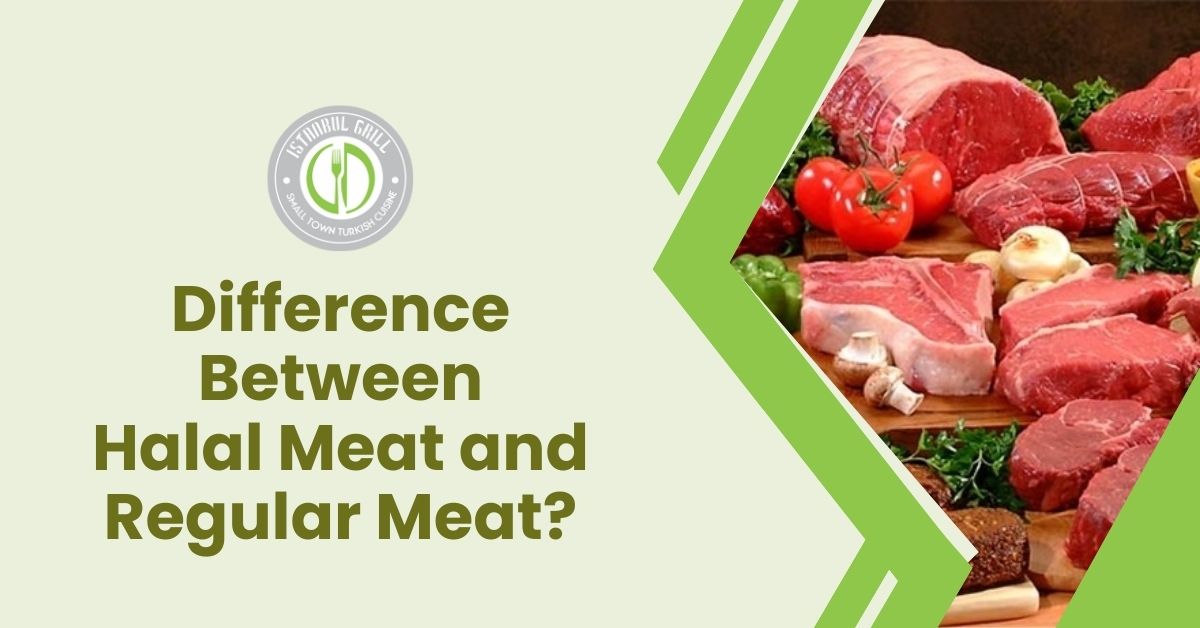
For more on what halal means and why it matters, read our guides on what is the difference between halal meat and regular meat and what are the haram foods in Islam.
Conclusion
Halal food is not the next big thing in American restaurant culture because of any single factor. It is the next big thing because of everything happening at once: a growing Muslim population, non-Muslim consumers choosing halal for ethical reasons, Gen Z values driving demand for transparent sourcing, major retailers expanding halal shelf space, fast casual chains going halal, and a food culture that is becoming more global and more curious every year.
The market data is clear. The consumer behavior is clear. The restaurant industry is responding. And at the center of this shift, serving authentic certified halal Turkish food to customers of all backgrounds in Orlando and Kissimmee, is Istanbul Grill Restaurant.
Come and taste what the future of American dining looks like. Visit our menu and plan your visit to Istanbul Grill Restaurant today.