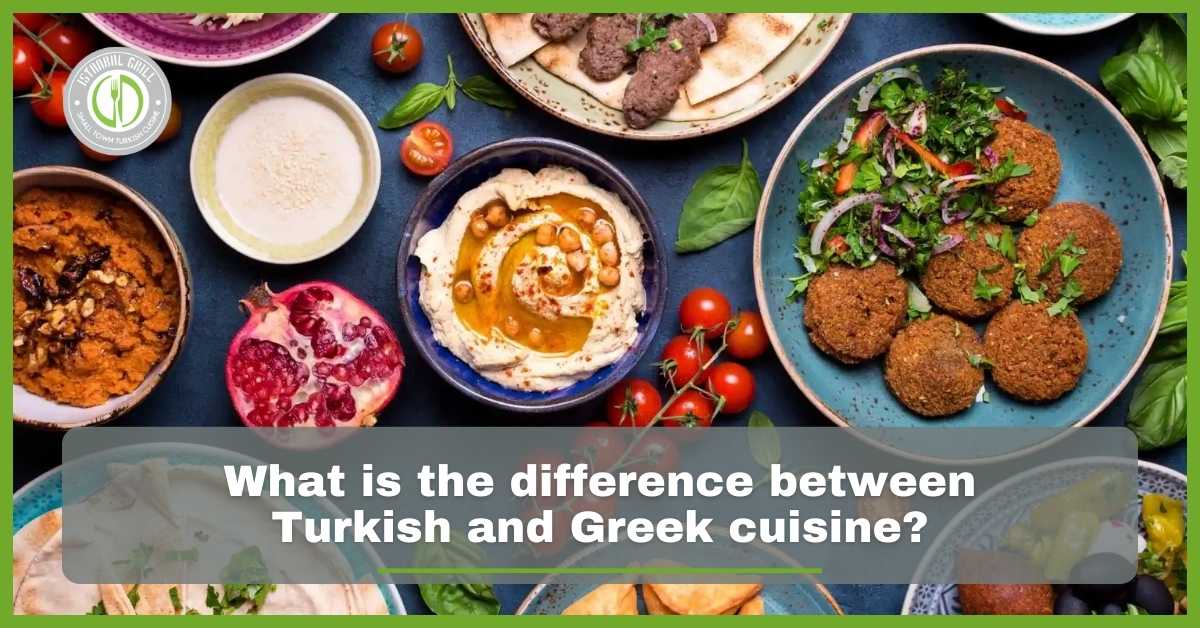
Turkish and Greek cuisine share many dishes, but they are not the same. The biggest differences are the cooking fat, the spices, the cheese, and the meat. Turkish cooking uses more butter, red pepper, and yogurt, and it does not use pork. Greek cooking leans on olive oil, oregano, lemon, and feta, and it often uses pork.
You can taste the Turkish side for yourself on our halal Turkish menu at Istanbul Grill in Orlando and Kissimmee. Below is a clear look at where the two cuisines match, where they split, and what to order from each.
Turkish vs Greek Food at a Glance
| Turkish Cuisine | Greek Cuisine | |
| Main cooking fat | Butter and olive oil | Mostly olive oil |
| Go-to flavors | Red pepper flakes, cumin, sumac, dried mint | Oregano, dill, lemon, bay leaf |
| White cheese | Beyaz peynir (Turkish white cheese) | Feta |
| Pork | Not part of traditional cooking | Common, for example in gyros and souvlaki |
| Yogurt | Used in soups, sauces, dips, and the drink ayran | Thick strained yogurt, used in tzatziki and with honey |
| Seafood | Common on the coasts | Very common across the islands and coast |
Why Turkish and Greek Food Are So Alike
Greece and Turkey are neighbors. They share the Aegean Sea and the same warm climate, so the same olives, grapes, lemons, and vegetables grow in both. For hundreds of years, much of what is now Greece was also part of the Ottoman Empire.
History moved people, and people moved recipes. In 1923, Greece and Turkey signed an agreement at Lausanne to swap populations. About 1.2 million Greek Orthodox people left Turkey for Greece, and about 400,000 Muslims left Greece for Turkey. Greeks who lived in Istanbul were left out of the swap.
Many of the refugees who went to Greece came from Asia Minor, the land that is now western Turkey. They carried their home cooking with them. That is one reason some Greek and Turkish dishes taste so much alike today.
Dishes Both Countries Make
| Dish | Turkish Name | Greek Name | The Main Difference |
| Stuffed grape leaves | Yaprak sarması | Dolmades | In Turkish, “sarma” means wrapped and “dolma” means stuffed. Turks use “dolma” for stuffed peppers and other vegetables. |
| Yogurt and cucumber dip | Cacık | Tzatziki | Cacık is often thinner and can be eaten with a spoon. Tzatziki is thick and made for dipping. |
| Eggplant and meat bake | Musakka | Moussaka | Greek moussaka has a thick white béchamel sauce on top. Turkish musakka usually does not. |
| Eggplant with tomato and onion | İmam bayıldı | Imam baildi | The name means “the imam fainted.” The dish is almost the same in both countries. |
| Grilled meat on skewers | Şiş kebap | Souvlaki | Turkish versions use lamb, beef, or chicken. Greek souvlaki is often pork or chicken. |
| Egg and lemon soup | Terbiyeli çorba | Avgolemono | Greek cooks often use whole eggs. Turkish cooks often use only the yolks with lemon juice. |
| Nut pastry in syrup | Baklava | Baklava | Turkish baklava often uses pistachios and sugar syrup. Greek baklava often uses walnuts and honey syrup. |
Want to go deeper on meat cooked on a spit? Read Turkish doner vs Greek gyros vs Arabic shawarma.
Flavor Differences You Can Taste
Cooking Fat
Greek cooking uses olive oil for almost everything. Turkish cooking uses olive oil too, mostly along the Aegean coast. In much of Turkey, butter is the main cooking fat, which makes many dishes richer.
Spices and Herbs
Turkish food gets its warmth from red pepper flakes, cumin, sumac, and dried mint. Greek food leans on oregano, dill, lemon, and bay leaf. So Turkish dishes often taste warmer and a little spicy, while Greek dishes taste more herby and bright.
Cheese
Greece is famous for feta. In the European Union, only cheese made in Greece from sheep’s milk, or sheep and goat milk, can be called feta. Turkey has its own white cheese, beyaz peynir. To learn how they compare, read the difference between feta and Turkish white cheese.
Meat
This is one of the biggest differences. Most people in Turkey are Muslim, so pork is not part of traditional Turkish cooking. Lamb, beef, and chicken are the main meats. In Greece, pork is very common, especially in gyros and souvlaki. If you eat halal, see what makes Turkish food halal.
Yogurt
Both countries love yogurt. Turkish cooking puts it almost everywhere: on kebabs, in soups, in dips, and in ayran, a cold salty yogurt drink. Greek cooking often uses thick strained yogurt in tzatziki or eats it with honey.
How a Meal Starts: Meze
In both countries, a meal often starts with meze, small plates that everyone shares. A Turkish meze table may have hummus, ezme, haydari, and cacık. A Greek table may have tzatziki, olives, and fried cheese.
At Istanbul Grill, our Mixed Appetizer plate brings five meze together: ezme, hummus, tabouli, baba ganoush, and cacık. For more ideas, see 6 Turkish mezes you must try.
What to Order at Istanbul Grill
Want to taste the Turkish side of this story? Start with these dishes from our menu:
- Adana Kebab: ground meat seasoned with red pepper and grilled on a skewer. Choose chicken, beef, or lamb.
- Iskender Style Kebab: sliced meat over bread with a special sauce and yogurt.
- Lahmacun: thin dough topped with spiced minced meat, served with onions, tomatoes, and parsley.
- Cacık: our yogurt, cucumber, mint, and dill dip. Try it next to your memory of tzatziki.
- Mosakka: baked eggplant with ground beef, the Turkish cousin of Greek moussaka.
- Turkish Sigara Böreği: crispy rolls of dough filled with feta cheese.
- Künefe and Baklava: two classic Turkish sweets.
- Ayran and Turkish Coffee: the drinks that go with a Turkish meal.
Ready to eat? Order online or book a table.
Is Turkish Food Mediterranean?
Yes. Turkey sits on the Mediterranean Sea, and so does Greece. Both cuisines fit the Mediterranean way of eating: lots of vegetables, beans, grains, and olive oil, with less red meat than a typical American plate. To learn more, read the Mediterranean diet and Turkish foods for American families.
Visit Istanbul Grill
We are open 7 days a week. Monday to Saturday, 12:00 PM to 10:00 PM. Sunday, 2:00 PM to 10:00 PM.
- Istanbul Grill Orlando: 9428 South Orange Blossom Trail, Orlando, FL 32837. Call 407-286-0887.
- Istanbul Grill Kissimmee: 2901 Parkway Blvd., Kissimmee, FL 34747. Call 407-507-0100.
Frequently Asked Questions
Are Turkish and Greek food the same?
No, but they are close. Both use olive oil, lamb, rice, bread, yogurt, and lemon, and many dishes appear in both under different names. The differences are in the cooking fat, spices, cheese, and meat.
What is the main difference between Turkish and Greek food?
Turkish food uses more butter, red pepper, and cumin, and it does not use pork. Greek food uses more olive oil, oregano, lemon, and feta, and pork is common.
Is kebab Greek or Turkish?
Kebabs such as şiş kebap and Adana kebap are a core part of Turkish cooking. Greece has its own close cousin, souvlaki, which is often made with pork or chicken.
Is baklava Greek or Turkish?
Both countries make baklava, and both are proud of it. The layered baklava most people know today is closely tied to the Ottoman palace kitchens in Istanbul. Turkish baklava often uses pistachios, while Greek baklava often uses walnuts and honey.
Is Greek food halal?
Not always. Pork and wine are common in Greek cooking, so a Greek restaurant is not halal unless it says so. Istanbul Grill serves a halal Turkish menu at both of its locations.
Is Turkish food spicier than Greek food?
Turkish food often has more heat from red pepper flakes. Greek food leans more on herbs and lemon. Most dishes in both cuisines are flavorful but not very hot.
Where can I eat Turkish food in Orlando?
Istanbul Grill serves halal Turkish food at 9428 South Orange Blossom Trail in Orlando and at 2901 Parkway Blvd. in Kissimmee. Both are open 7 days a week.